
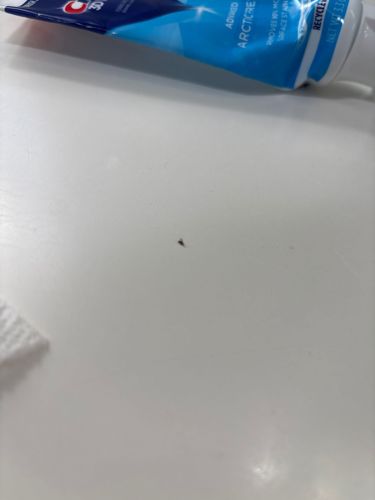
Fly (likely a small species like a Gnat or Fruit Fly)
Given the ambiguity of the image, a specific scientific name cannot be provided. It belongs to the Order Diptera. If it is a fruit fly, common species include Drosophila melanogaster.
- Order & Family
- Order: Diptera (True Flies), Family: Varies widely (e.g., Drosophilidae for fruit flies, Culicidae for mosquitoes, Muscidae for house flies). Given its small size, it could be a Gnat (various families within Diptera) or a Fruit Fly.
- Size
- Typically very small, likely 1-5 mm. True flies range widely in size from less than 1 mm to several centimeters.
Natural Habitat
Flies are ubiquitous and can be found in almost every terrestrial habitat on Earth. They are often found near food sources, decaying matter, moisture, or vegetation. Indoors, they might be attracted to food, drains, or garbage.
Diet & Feeding
The diet varies greatly depending on the specific type of fly. Some are decomposers (feeding on decaying organic matter), some are parasites, some feed on nectar, and others are predatory or feed on blood. Without a clearer image, it's hard to specify.
Behavior Patterns
Flies are highly mobile and are strong fliers. Many species are attracted to decaying organic matter. They generally have a rapid life cycle involving egg, larva (maggot), pupa, and adult stages. Some species like house flies are active during the day.
Risks & Benefits
Risks: Many species of flies can be pests, vectors of diseases (e.g., house flies can transmit bacteria, mosquitoes transmit malaria), or cause nuisance. Some can bite. Benefits: Many flies are important pollinators, decomposers, and serve as a food source for other animals. Larvae of some species are used in maggot therapy (medical use).