
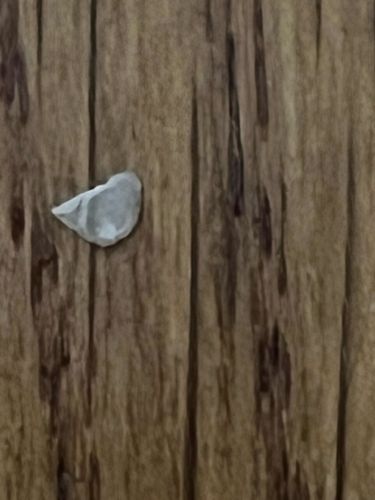
Bagworm Moth Larva (Casemaking Bagworm)
Family Psychidae (Psychidae is the family, specific genus/species is hard to determine from this image alone)
- Order & Family
- Order Lepidoptera, Family Psychidae
- Size
- Larvae grow up to 1-2 inches (2.5-5 cm) long, with their silk cases varying in size from 0.5 to 2.5 inches (1.3 to 6.3 cm) depending on the species and larval stage.
Natural Habitat
They are typically found on a wide variety of trees and shrubs, including conifers (e.g., cedar, juniper, pine, spruce) and deciduous trees (e.g., maple, oak, sycamore). They can be found in landscaped areas, forests, and orchards.
Diet & Feeding
The larvae are herbivorous, feeding on the leaves, needles, and sometimes bark of their host plants. They construct their protective silken cases using bits of leaves, twigs, and other debris from their host plant.
Behavior Patterns
Bagworm larvae create and live within a protective case made of silk and plant material. They carry this case with them as they feed, enlarging it as they grow. When ready to pupate, they attach their case to a branch. Adult males are winged and short-lived, while females of many species are wingless and remain inside their cases, attracting males with pheromones. After mating, the female lays eggs inside the case.
Risks & Benefits
Risks: Bagworms can be significant pests, especially during outbreaks, causing defoliation of ornamental plants, shade trees, and conifers. Severe infestations can lead to weakening or even death of host plants, particularly evergreens. Benefits: They serve as a food source for some predatory insects and birds, and can be part of the natural food chain, but their negative impact as pests generally outweighs their ecological benefits in populated or cultivated areas.