
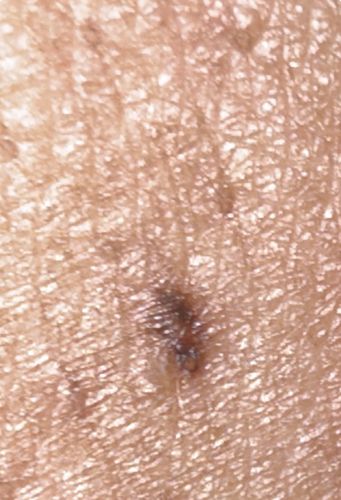
Pubic Louse
Phtirus pubis
- Order & Family
- Order: Psocodea (formerly Phthiraptera), Family: Pthiridae
- Size
- 1.1 to 1.8 millimeters in length
Natural Habitat
Found globally; exclusively on human hosts, primarily in the pubic hair and perianal region, but occasionally in eyelashes, eyebrows, or other coarse body hair.
Diet & Feeding
Obligate hematophage; feeds exclusively on human blood several times a day.
Behavior Patterns
They are sedentary parasites that grasp hair shafts with specialized claws. They cannot jump or fly and move slowly. The life cycle from egg (nit) to adult takes approximately 2-3 weeks.
Risks & Benefits
Risks include intense itching (pruritus) due to an allergic reaction to their saliva and potential secondary bacterial skin infections from scratching. They are not known to transmit major diseases. Benefit: Infestation serves as a clinical marker for potential screening of other sexually transmitted infections (STIs).