
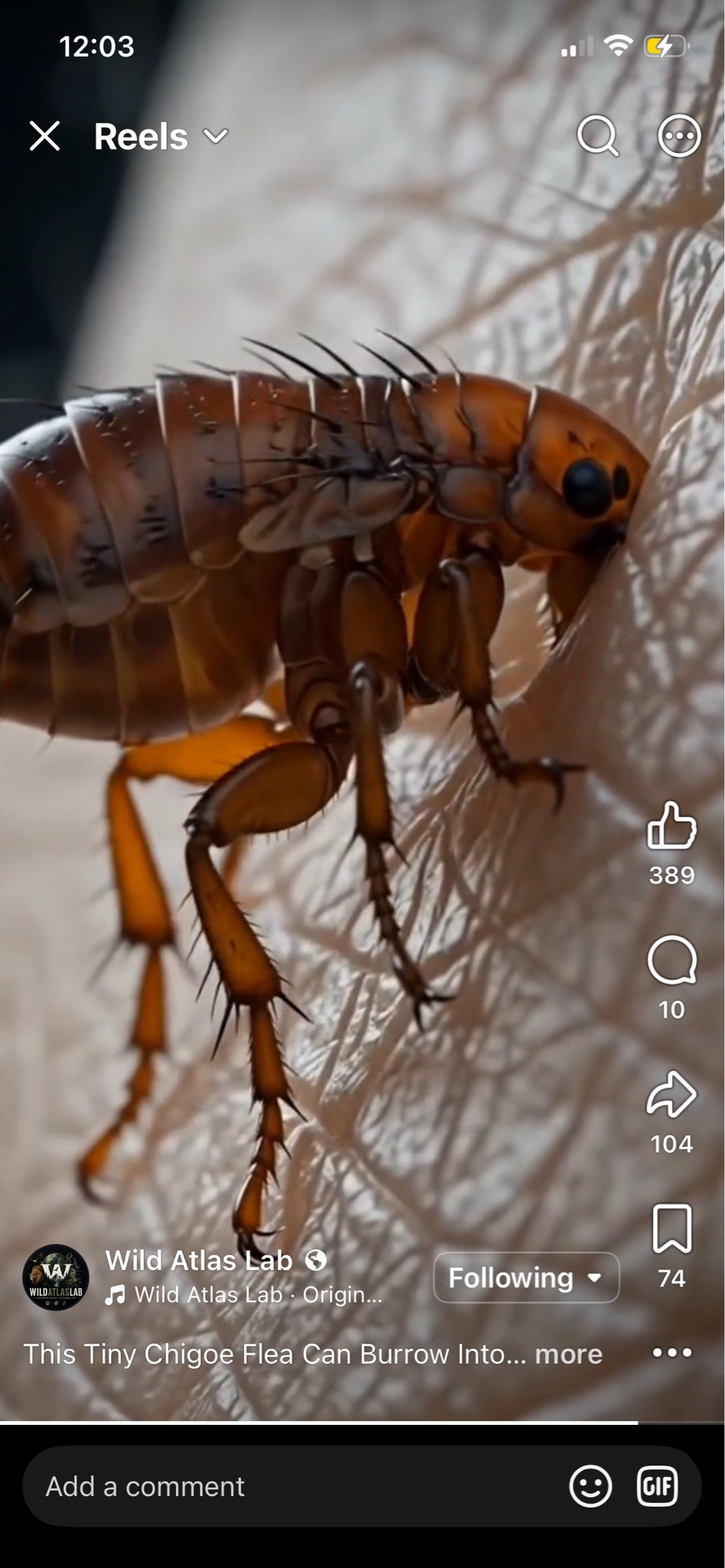
Community identification
Chigoe flea (also known as jigger or sand flea)
Tunga penetrans
- Order & Family
- Siphonaptera, Tungidae
- Size
- 1 to 2 mm (adults before swelling); mated females can swell up to 10 mm
Natural Habitat
Tropical and subtropical regions, particularly sandy soil, beaches, livestock pens, and rural environments
Diet & Feeding
Hematophagous; adult fleas feed on the blood of warm-blooded animals including humans, mammals, and birds
Behavior Patterns
Wingless parasite that uses strong hind legs for jumping. Mated females burrow into the skin of hosts (typically the feet or toes), swelling significantly as eggs develop before releasing them and dying
Risks & Benefits
Risks: Causes tungiasis, an inflammatory skin condition characterized by pain, itching, secondary bacterial infections, severe tissue damage, and potential loss of toes/nails. Benefits: None to humans; serves as a minor organism in parasite-host ecosystems