
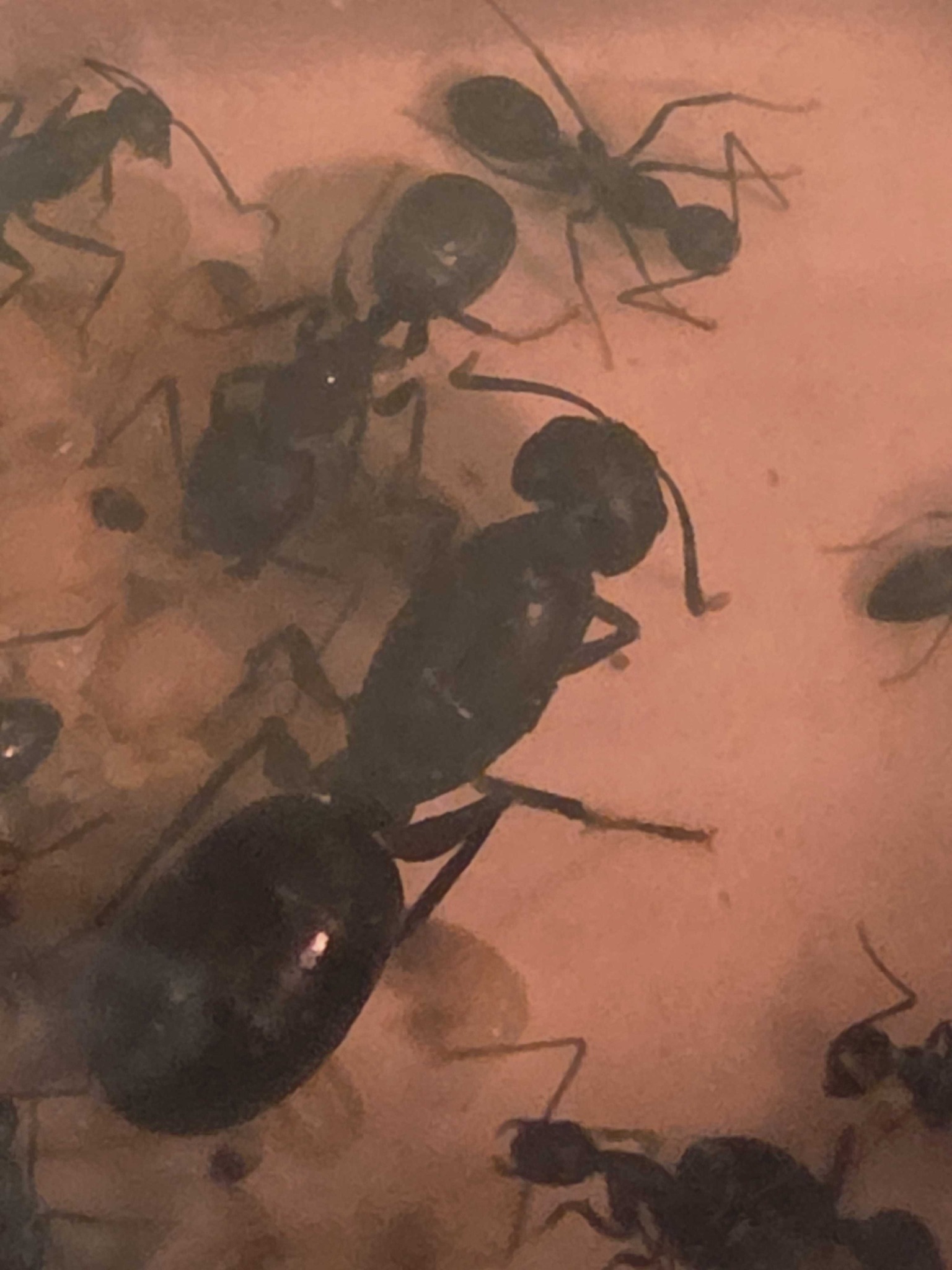
Black Carpenter Ant
Camponotus pennsylvanicus
- Order & Family
- Order: Hymenoptera, Family: Formicidae
- Size
- Workers range from 6mm to 12mm; Queens can reach up to 18mm-20mm.
Natural Habitat
Typically found in moist, decaying wood such as hollow logs or tree stumps, though they can also establish satellite nests in structural wood inside buildings.
Diet & Feeding
Opportunistic omnivores that feed on honeydew from aphids, insect secretions, plant juices, and scavenged dead insects; inside homes, they seek sweets, meats, and fats.
Behavior Patterns
Eusocial insects with a caste system including major and minor workers. They are primarily nocturnal and do not eat wood, but instead excavate it to create tunnels for their colony.
Risks & Benefits
Benefits include aerating soil and assisting in the decomposition of dead wood. Risks include structural damage to homes if nests are established in building timbers, and they can deliver a painful bite if provoked, often spraying formic acid into the wound.