
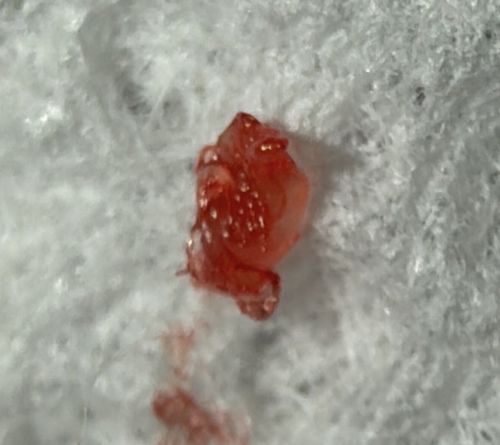
Community identification
Trombiculid mite (Larval stage)
Trombiculidae (Family)
- Order & Family
- Order: Trombidiformes, Family: Trombiculidae
- Size
- 0.15 to 0.3 mm (larvae are microscopic, nymphs and adults are larger)
Natural Habitat
Tall grass, low-lying vegetation, damp soil, and leaf litter; common in wooded areas.
Diet & Feeding
Larvae feed on skin cells and lymph from animal hosts (humans, rodents, birds). Nymphs and adults eat insect eggs and small invertebrates.
Behavior Patterns
Larvae wait on vegetation to latch onto passing hosts. They secrete digestive enzymes to dissolve skin tissue, creating a feeding tube called a stylostome. They naturally drop off after feeding for a few days.
Risks & Benefits
Causes intense itching and red welts (Chiggers). Do not transmit diseases in North America, but can transmit scrub typhus in parts of Asia. Beneficial as adults by consuming pest insect eggs.