
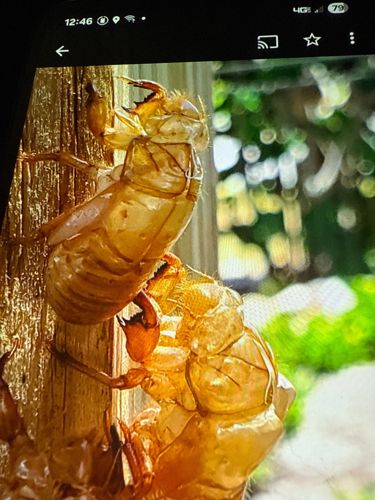
Cicada exuvia (molted shell)
Cicadidae (various genera and species depending on location)
- Order & Family
- Order: Hemiptera, Family: Cicadidae
- Size
- The exuviae (molted shells) typically range from 1 to 2 inches (2.5 to 5 cm) in length, reflecting the size of the emerging adult cicada.
Natural Habitat
Nymphs live underground, typically in forests, woodlands, and suburban areas where trees and shrubs are present. Adults are found on trees and other vegetation above ground.
Diet & Feeding
Nymphs feed on xylem fluid from tree roots. Adult cicadas feed on xylem fluid from various trees and woody plants.
Behavior Patterns
Cicadas undergo an incomplete metamorphosis, with nymphs living underground for most of their lives, feeding on xylem fluid from tree roots. When mature, they emerge from the ground, molt into their adult form, and then focus on reproduction. The exoskeletons (exuviae) seen in the image are left behind after the nymph has molted into an adult. Adult cicadas are known for their loud songs, produced by males to attract mates.
Risks & Benefits
Risks: While adult cicadas can cause some cosmetic damage to young trees by laying eggs in branches, they are generally not considered pests. They do not bite or sting humans. Benefits: Cicadas play a role in nutrient cycling as decomposers when they die and provide a food source for various birds, mammals, and other insects. Their burrowing activity as nymphs can also help aerate the soil.