
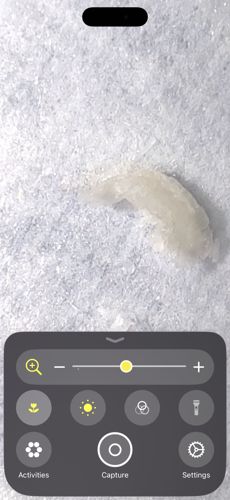
Community identification
Wax moth larva
Galleria mellonella (Greater wax moth) or Achroia grisella (Lesser wax moth)
- Order & Family
- Lepidoptera: Pyralidae
- Size
- Approximately 1 to 20 millimeters in length depending on the growth stage (instar).
Natural Habitat
Honey bee colonies, wax-related storage areas, and abandoned hives; they thrive in warm, dark environments where beeswax is present.
Diet & Feeding
Honey, pollen, and mainly beeswax (cerophagy). They are one of the few organisms capable of digesting plastic (polyethylene).
Behavior Patterns
They are nocturnal moths. As larvae, they tunnel through honeycomb, lining the tunnels with silk, which can entangle bee larvae and damage the hive structure.
Risks & Benefits
Risks: Major pest to apiculture (beekeeping) as they can destroy hive frames and weaken bee colonies. Benefits: Valuable for research in toxicology and plastic biodegradation; also used as a live food source for reptiles and birds (waxworms).