
Community identification
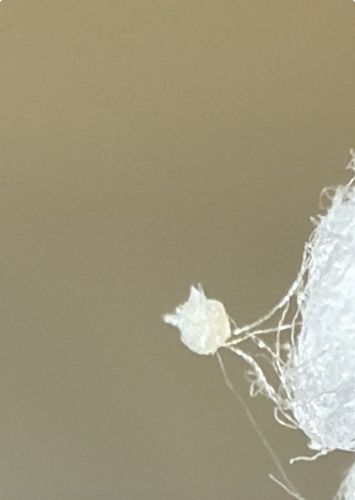
Common House Spider Egg Sac
Parasteatoda tepidariorum
- Order & Family
- Order: Araneae; Family: Theridiidae (Cobweb spiders)
- Size
- The egg sac itself is roughly 6mm to 9mm in diameter; the adult spiders range from 5mm to 8mm.
Natural Habitat
Typically found in or around human dwellings, basements, sheds, and garages, often suspended in tangled cobwebs in dark corners or ceiling joints.
Diet & Feeding
Egg sacs do not eat; however, once hatched, spiderlings eat very small insects. Adults consume common indoor pests like flies, gnats, and mosquitoes.
Behavior Patterns
Females produce several pear-shaped, brownish-white or translucent egg sacs throughout the season. They hang them within a messy, haphazard web and guard them until hundreds of spiderlings emerge.
Risks & Benefits
Low risk to humans as they are not aggressive and their venom is not considered medically significant. They provide ecological benefits by controlling indoor insect populations.