
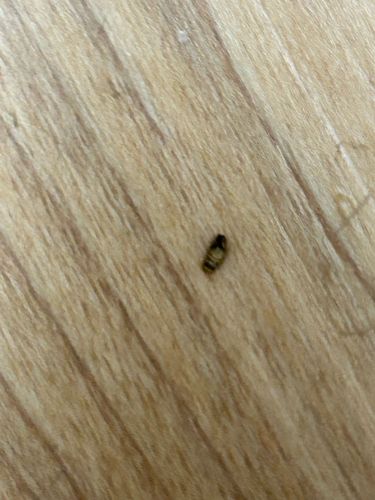
Carpet Beetle Larva (likely varied carpet beetle or black carpet beetle)
Dermestes and Anthrenus species (e.g., Anthrenus verbasci, Attagenus unicolor)
- Order & Family
- Order: Coleoptera, Family: Dermestidae
- Size
- Larvae typically range from 2 mm to 5 mm (0.08 to 0.2 inches) in length, depending on the species and developmental stage.
Natural Habitat
Indoors, larvae are found in dark, undisturbed places such as under carpets and rugs, in closets, drawers, attics, and inside upholstered furniture. They can also be found in pantries or storage areas if dry goods are infested. Outdoors, they may be found in bird nests, animal nests, or feeding on dead insects.
Diet & Feeding
The larvae are scavengers, feeding on a wide range of organic materials including natural fibers (wool, silk, felt, feathers, fur, animal bristles), dead insects, dried pet food, cereal products, and museum specimens. They do not feed on synthetic fibers.
Behavior Patterns
Carpet beetle larvae are typically found in dark, undisturbed areas where their food sources are abundant. They avoid light. The adults are attracted to light and are often found near windows. Larvae are slow-moving and tend to curl up when disturbed. They undergo complete metamorphosis.
Risks & Benefits
Risks: Carpet beetle larvae can be significant pests in homes, museums, and warehouses due to their destructive feeding habits on natural fibers and dried food products. They can cause damage to clothing, carpets, furniture, and food items. Some people may experience skin irritation or allergic reactions from contact with their bristles or shed skins. Benefits: In nature, carpet beetles are part of the decomposition process, helping to break down organic matter such as dead animals and insects. However, this is negligible in a household context.