
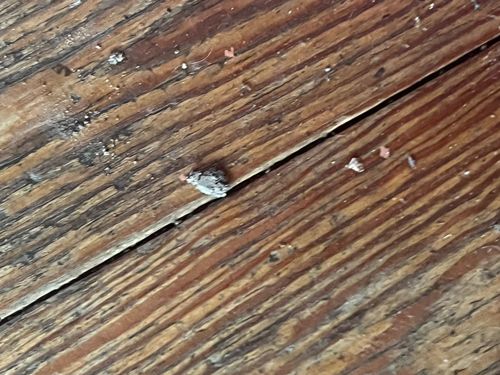
Case-bearing Clothes Moth
Tinea pellionella
- Order & Family
- Order: Lepidoptera, Family: Tineidae
- Size
- Larvae (in case): 5-10 mm; Adults (wingspan): 9-16 mm
Natural Habitat
Indoors, especially in dark, undisturbed areas such as closets, attics, storage chests, and behind furniture where suitable food sources (like woolens, carpets, or upholstered furniture) are present. They prefer high humidity.
Diet & Feeding
Larvae feed primarily on materials of animal origin containing keratin, such as wool, fur, silk, feathers, pet hair, and even lint or dust containing these materials. They are known household pests.
Behavior Patterns
Case-bearing clothes moth larvae construct a silken case, often camouflaged with fibers, dust, or debris from their environment, which they carry with them. They retreat into this case when disturbed. Adults are poor flyers and prefer to run.
Risks & Benefits
Risks: Significant household pests that can cause irreparable damage to clothing, carpets, tapestries, and other valuable items made from natural fibers. They do not bite or transmit diseases. Benefits: None known for humans; in natural ecosystems, they play a minor role as decomposers of animal remains (e.g., bird nests, carcasses), but their primary impact is as pests in human environments.