
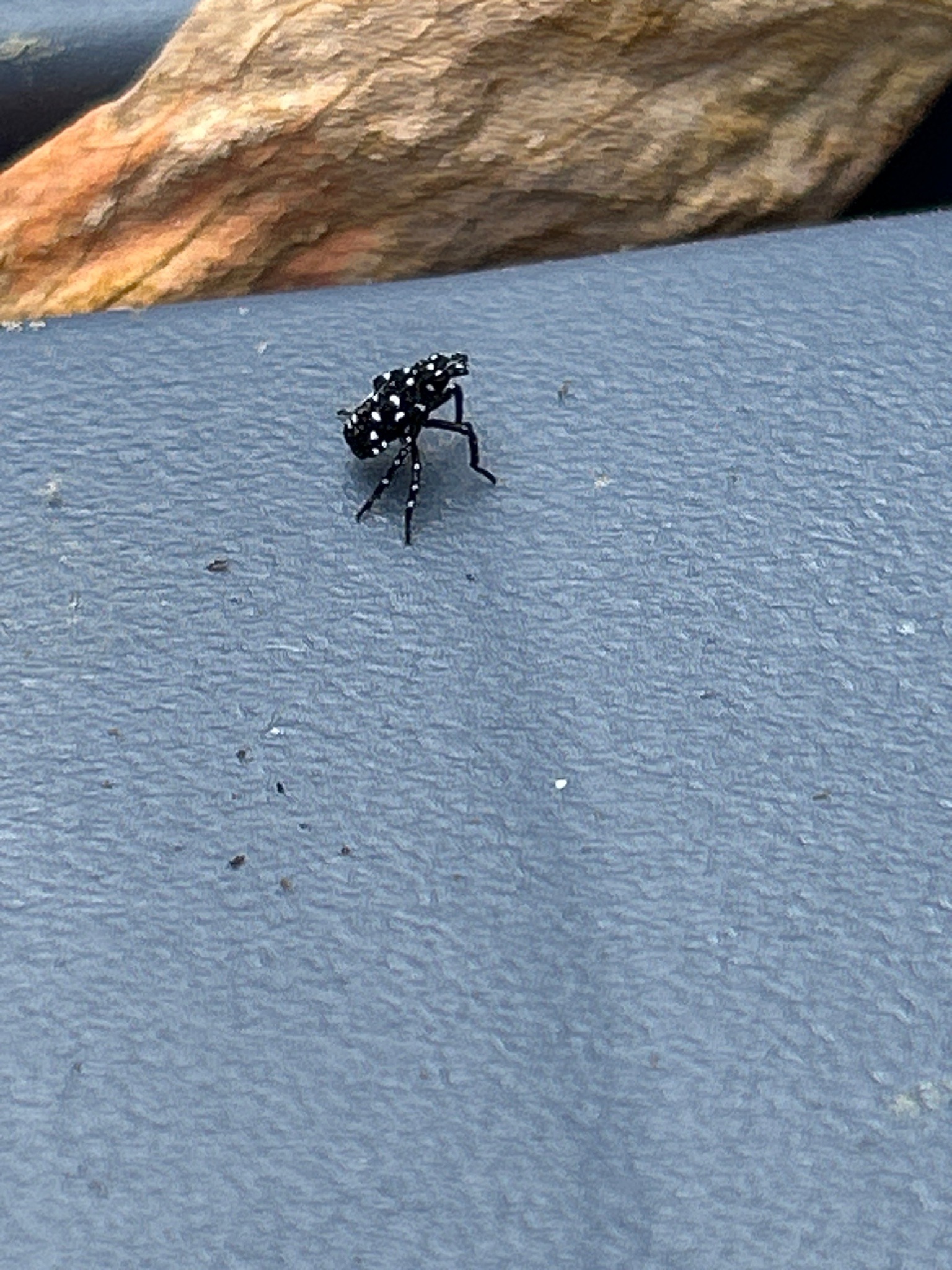
Spotted Lanternfly (Early Nymph Stage)
Lycorma delicatula
- Order & Family
- Order Hemiptera, Family Fulgoridae
- Size
- 1/8 to 1/4 inch (first through third instars)
Natural Habitat
Agricultural areas, residential landscapes, and wooded areas, specifically favoring the Tree of Heaven (Ailanthus altissima)
Diet & Feeding
Herbivorous sap-feeder; uses piercing-sucking mouthparts to feed on the phloem of various plants including grapes, hops, stone fruits, and hardwood trees
Behavior Patterns
Nymphs are wingless and known for their strong jumping ability. They move up and down host plants daily to feed and go through four nymphal stages before becoming winged adults. This black-with-white-spots stage is the early instar phase.
Risks & Benefits
Highly invasive and destructive pest. They excrete sticky 'honeydew' that encourages mold growth, which can kill plants and attract stinging insects. They pose a significant economic threat to the timber, grape, and orchard industries. They have no known benefits to the local ecosystems where they are invasive.