
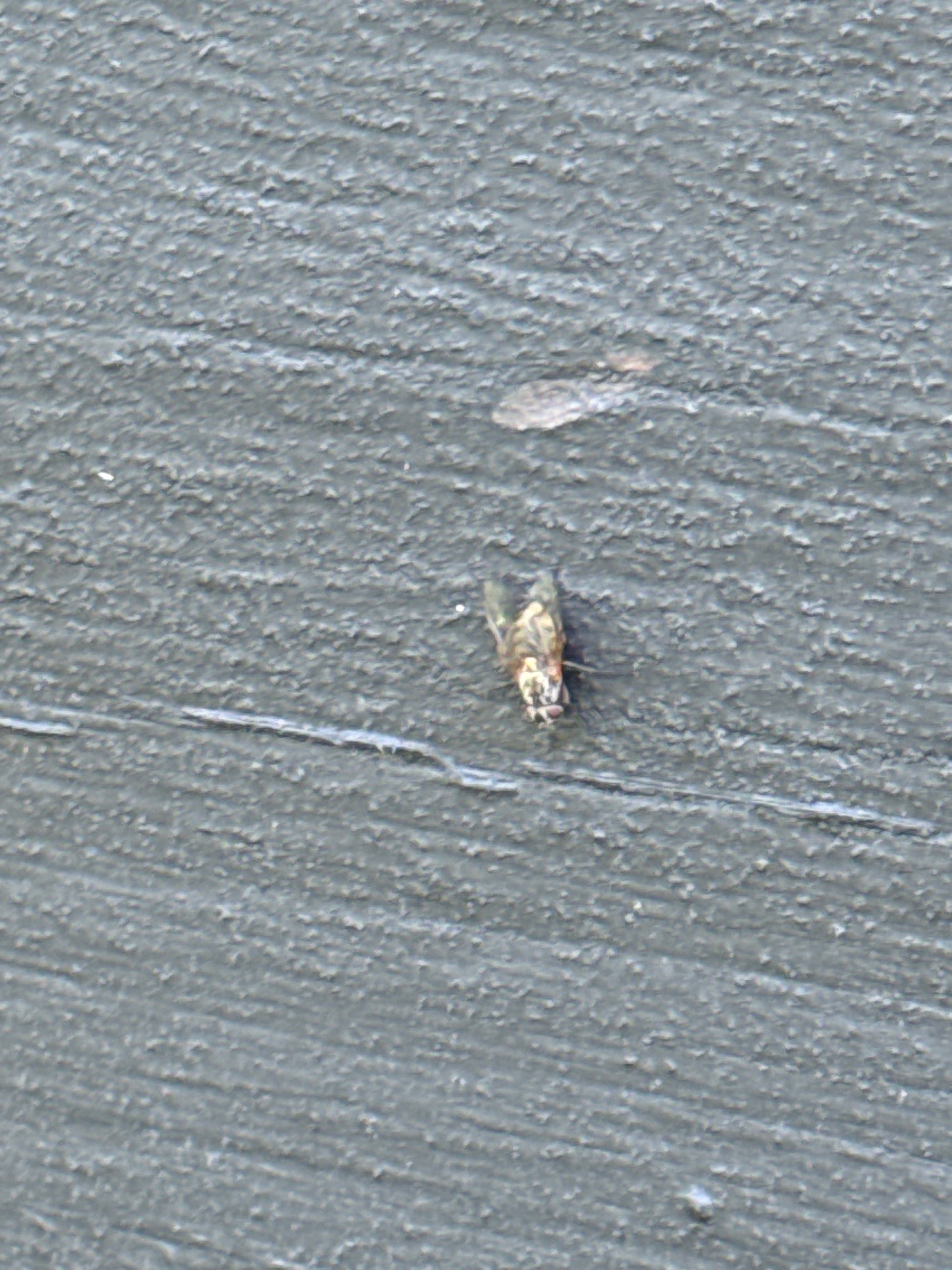
Community identification
Flesh Fly
Sarcophaga spp.
- Order & Family
- Diptera: Sarcophagidae
- Size
- 8 mm to 20 mm (0.3 to 0.8 inches)
Natural Habitat
Found worldwide in open areas with decaying organic matter, gardens, and near human dwellings.
Diet & Feeding
Adults feed on nectar, fruit juices, and fluids from decaying matter. Larvae (maggots) are scavengers of carrion or animal waste; some are parasites of other insects.
Behavior Patterns
Notable for being ovoviviparous, meaning they give birth to live larvae rather than laying eggs. They are strong fliers and are often the first insects to arrive at a carcass.
Risks & Benefits
Risks: Can transmit pathogens and occasionally cause myiasis. Benefits: Vital decomposers in the ecosystem and useful in forensic entomology for determining time of death.