
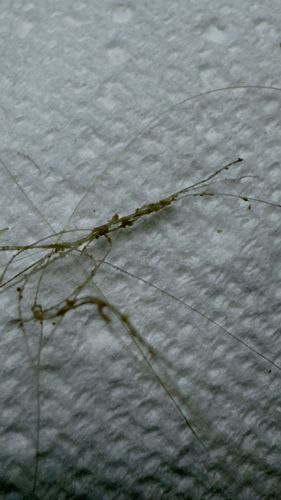
Community identification
Phantom Crane Fly
Bittacomorpha clavipes
- Order & Family
- Diptera: Ptychopteridae
- Size
- 1.0 to 1.5 cm body length; legs can extend much further.
Natural Habitat
Marshes, wetlands, swampy areas, and wet woodlands with standing or slow-moving water.
Diet & Feeding
Larvae eat decaying organic matter (detritus) in saturated mud; adults rarely feed but may consume nectar.
Behavior Patterns
Characterized by a unique 'phantom' flight where they drift in the air using expanded leg sacks to catch the wind; they often hold their long, white-banded legs outstretched.
Risks & Benefits
Harmless to humans; they do not bite or sting. They benefit the ecosystem by breaking down organic matter in wetlands.