
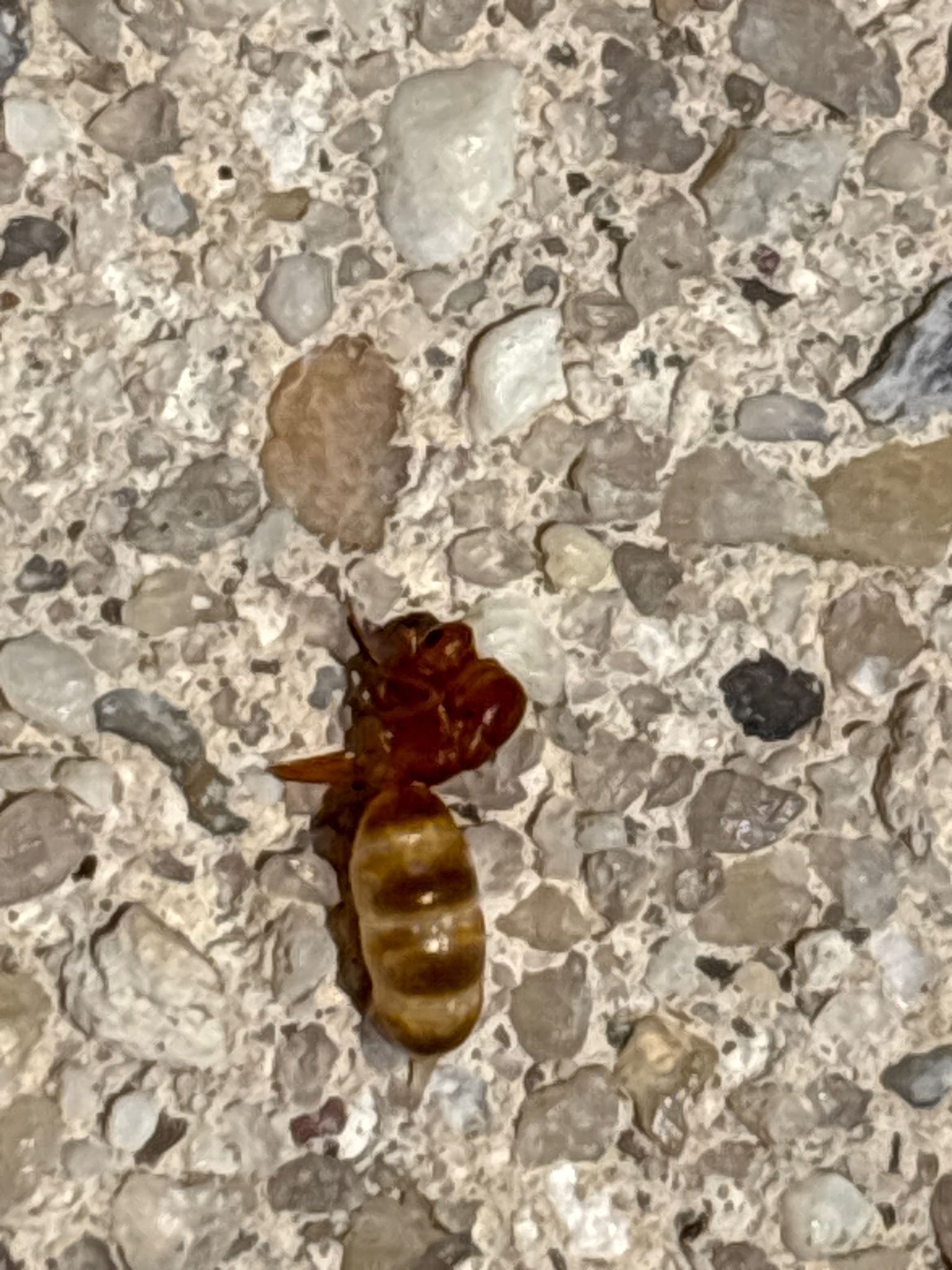
Community identification
Velvet Ant (Specifically a wingless female)
Dasymutilla occidentalis (Note: precise species identification varies by region)
- Order & Family
- Order Hymenoptera, Family Mutillidae
- Size
- 6 to 20 millimeters (approximately 0.25 to 0.75 inches)
Natural Habitat
Found in dry, sandy open areas, grasslands, and suburban lawns where their ground-nesting host species live.
Diet & Feeding
Adults primarily feed on nectar and water; larvae are external parasites of various ground-nesting bees and wasps.
Behavior Patterns
Active during the day, females are ground-bound and move rapidly in search of host nests. They are known for a very hard exoskeleton and the ability to produce a squeaking or stridulating sound when threatened.
Risks & Benefits
Benefits the ecosystem by controlling populations of other ground-nesting wasps/bees. Risks to humans include an extremely painful sting if handled or stepped on, though they are not aggressive and lack a hive to defend.