
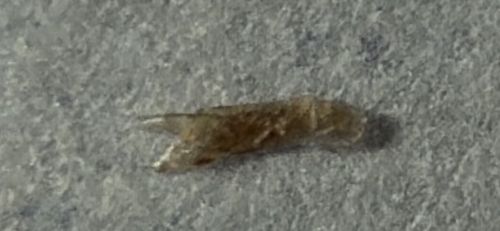
Case-bearing Clothes Moth Larva (or Casemaking Clothes Moth Larva)
Tinea pellionella
- Order & Family
- Order: Lepidoptera, Family: Tineidae
- Size
- Larval case is usually 6–10 mm (approx. 1/4 to 3/8 inch) long.
Natural Habitat
Typically found indoors in dark, undisturbed areas such as closets, under carpets, or in storage boxes where natural fibers (wool, fur, silk), feathers, or upholstery are present.
Diet & Feeding
Larvae feed on animal-based natural fibers including wool, cashmere, fur, silk, feathers, felt, and sometimes hair or pet dander accumulated in dust.
Behavior Patterns
Unlike other moth larvae, this species carries a portable, silken tube-like 'case' around with it for protection, dragging it along as it moves. The larvae camouflages the case with fibers from whatever material it is eating. They tend to graze in one spot and then move, creating irregular holes in fabrics.
Risks & Benefits
They are a household pest that causes significant damage to clothing, carpets, rugs, and upholstery. They pose no direct health risk to humans (they do not bite or sting), but an infestation can be costly due to destruction of textiles.