
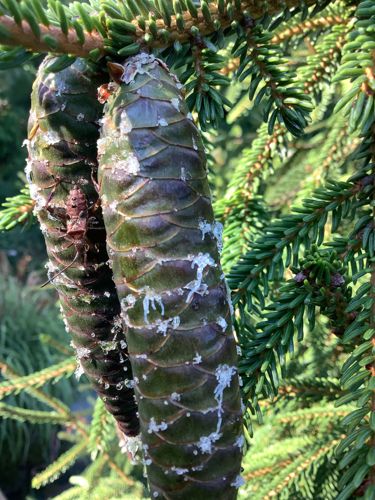
Conifer Seed Bug or Leaffooted Bug (specifically, a species of Leptoglossus, likely L. occidentalis)
Leptoglossus occidentalis (Western Conifer Seed Bug) is the most likely species based on the image and context of being on a conifer.
- Order & Family
- Order: Hemiptera, Family: Coreidae
- Size
- Adults typically range from 15 to 20 mm (0.6 to 0.8 inches) in length.
Natural Habitat
Conifer seed bugs are found in conifer forests, woodlands, and urban landscapes where their host trees are present. They are especially prevalent on Douglas-fir, pines, and spruces.
Diet & Feeding
The primary diet consists of the developing seeds and cones of various conifer trees, such as pines, firs, spruces, and hemlocks. They feed by inserting their stylets into the cones or seeds to extract the liquid contents. They may also feed on other plant parts occasionally.
Behavior Patterns
It is a sap-feeding insect, meaning it uses its piercing-sucking mouthparts to extract sap from plants. They are typically slow-moving and can be found on the host plant throughout their life stages. Overwintering occurs as eggs laid on host plants, or sometimes as adults.
Risks & Benefits
Potential Risks: 1. Agricultural Pest: Can cause significant damage to conifer seed crops in forestry, leading to reduced seed viability and germination rates, which impacts tree regeneration. 2. Nuisance Pest: In autumn, they often seek shelter in homes and buildings to overwinter, becoming a nuisance. They can emit a foul-smelling odor if disturbed or crushed. Potential Benefits: 1. Minor Role in Ecosystem: As part of the food chain, they can be prey for birds and other insects. 2. Not harmful to humans or pets: They do not bite or sting humans, and are not known to transmit diseases.