
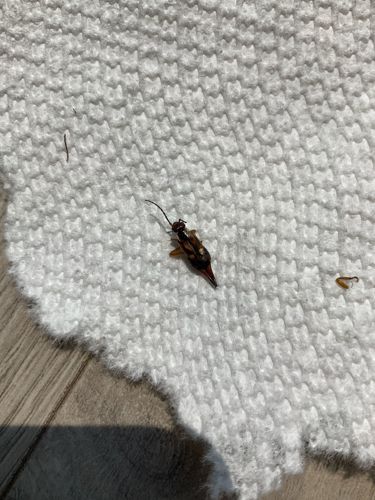
Earwig
Forficula auricularia (European Earwig is one of the most common species pictured)
- Order & Family
- Order: Dermaptera, Family: Forficulidae (most common species like the European Earwig)
- Size
- Typically 5-25 mm (0.2-1 inch) in length, varying by species.
Natural Habitat
Earwigs prefer moist, dark, and cool environments. Outdoors, they are found under rocks, logs, leaf litter, mulch, garden debris, and potted plants. Indoors, they may be found in basements, crawlspaces, bathrooms, and other damp areas.
Diet & Feeding
Earwigs are omnivorous. They feed on decaying organic matter, fungi, mold, soft fruits, vegetables, and other insects (both living and dead), including aphids and other pests. Some species can also feed on seedlings or ornamental plants.
Behavior Patterns
Earwigs are nocturnal and hide in dark, moist places during the day. They are attracted to lights at night and may enter homes. Females lay eggs in clusters, typically in the soil, and care for their young, sometimes even feeding them. They are generally not aggressive but may use their pincers if threatened, though a pinch is usually harmless.
Risks & Benefits
Risks: While generally harmless to humans, they can be a nuisance pest when they enter homes in large numbers. They may occasionally damage garden plants, especially seedlings, soft fruits, and ornamental flowers. The pincers can give a slight pinch but are not venomous. Benefits: They can be beneficial consumers of decaying organic matter and predatory on some garden pests like aphids, although their impact on pest control is often minor compared to general nuisance.