
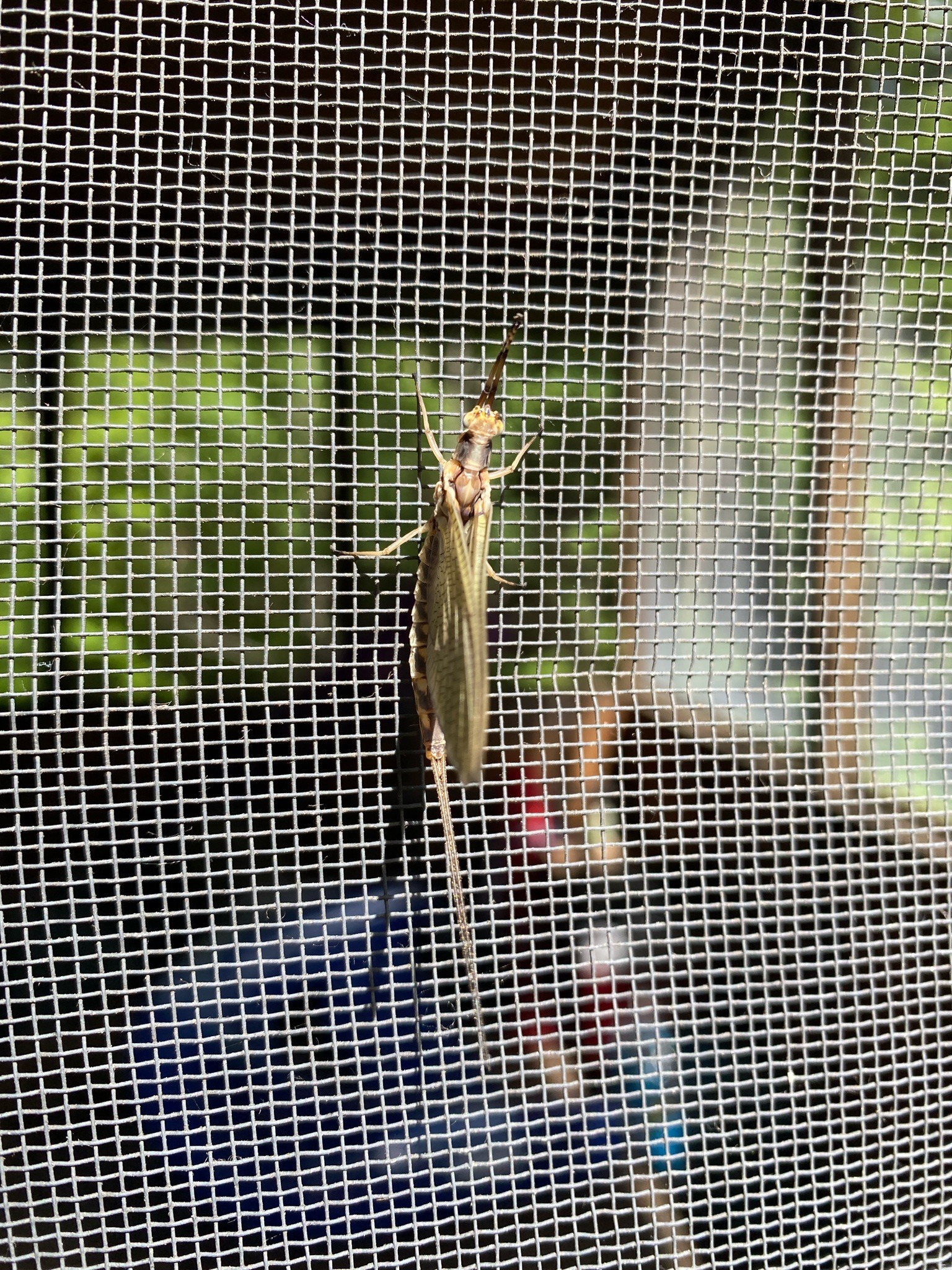
Community identification
Mayfly
Ephemeroptera
- Order & Family
- Order: Ephemeroptera; Family: Multiple (including Ephemeridae, Baetidae, etc.)
- Size
- 1 mm to 30 mm in length, not including the long tail filaments which can double the total length.
Natural Habitat
Near freshwater sources like lakes, ponds, rivers, and streams where the nymphs develop.
Diet & Feeding
Adults do not eat; they lack functional mouthparts and a digestive system. Nymphs (juveniles) are typically herbivores or detritivores, feeding on algae and organic debris.
Behavior Patterns
Spend most of their life (up to 2 years) as aquatic nymphs. Adults emerge in massive swarms for a very short aerial life—often lasting only a few hours to a couple of days—solely to mate and lay eggs.
Risks & Benefits
Completely harmless to humans; they cannot bite or sting. They are essential to the ecosystem as a primary food source for fish and birds and serve as biological indicators of high water quality.