
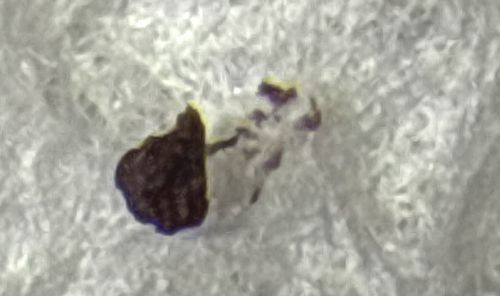
Case-bearing Clothes Moth Larva
Tinea pellionella
- Order & Family
- Order: Lepidoptera, Family: Tineidae
- Size
- Larvae are roughly 1/4 to 3/8 inch (6-10 mm) long.
Natural Habitat
Found indoors in darkened closets, wardrobes, underneath furniture, or in storage areas where animal-based fabrics (wool, silk, fur) are kept.
Diet & Feeding
Feeds on keratin-rich animal fibers such as wool clothing, carpets, rugs, felt, fur, silk, and sometimes feathers or pet hair accumulated in dust bunnies.
Behavior Patterns
Unlike the webbing clothes moth, this larva carries a portable, flattened tube-like case made of silk and debris (like fibers from the fabric it is eating) which helps camoflauge it. It lives inside this case and drags it along as it moves.
Risks & Benefits
Risks: Significant pest of textiles; can cause irreparable damage to expensive clothing, rugs, and upholstery. They chew irregular holes in fabrics. Benefits: In nature, they help break down animal matter, but inside homes, they are purely pests.