
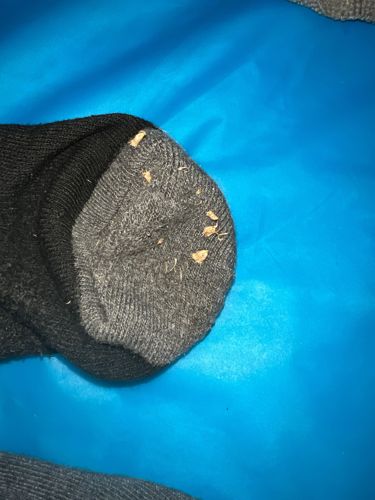
Community identification
Clothing moth (Larva stage)
Tineola bisselliella
- Order & Family
- Order: Lepidoptera, Family: Tineidae
- Size
- Larvae are typically 1/4 to 1/2 inch (7–12 mm) long.
Natural Habitat
Indoor environments, particularly in dark, undisturbed areas like closets, drawers, and storage containers where natural fibers are available.
Diet & Feeding
Keratin-rich animal fibers including wool, fur, silk, feathers, felt, and leather. They do not eat synthetic fabrics unless blended with natural fibers.
Behavior Patterns
Larvae are photophobic (avoid light) and spin silken tubes or mats while feeding. They undergo complete metamorphosis; the adult moths do not feed, as their only purpose is to mate and lay eggs.
Risks & Benefits
Risks: Destructive pest that causes permanent damage to clothing, upholstery, and carpets. Benefits: In the wild, they help decompose animal remains like fur and feathers, but they provide no benefits in a domestic setting.