
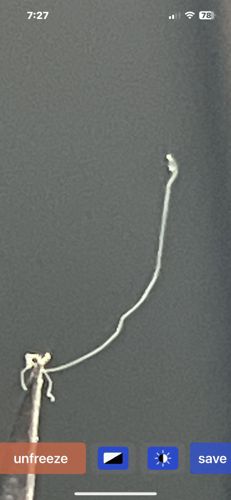
Community identification
Crane fly (likely a phantom crane fly or tipulid)
Family Tipulidae or Bittacomorpha clavipes
- Order & Family
- Order: Diptera; Family: Tipulidae (or Pediciidae/Ptychopteridae)
- Size
- Body length 10-25mm; wingspan up to 60mm.
Natural Habitat
Damp environments, wetlands, marshes, and areas with decaying organic matter.
Diet & Feeding
Larvae (leatherjackets) eat decaying vegetation or plant roots; adults often do not eat at all or consume nectar.
Behavior Patterns
Poor fliers with long, fragile legs that easily break off (autotomy) to escape predators; often found bobbing in flight near water or lights.
Risks & Benefits
Ecologically beneficial as decomposers and a food source for birds; harmless to humans as they do not bite or sting, though larvae can damage lawns.