
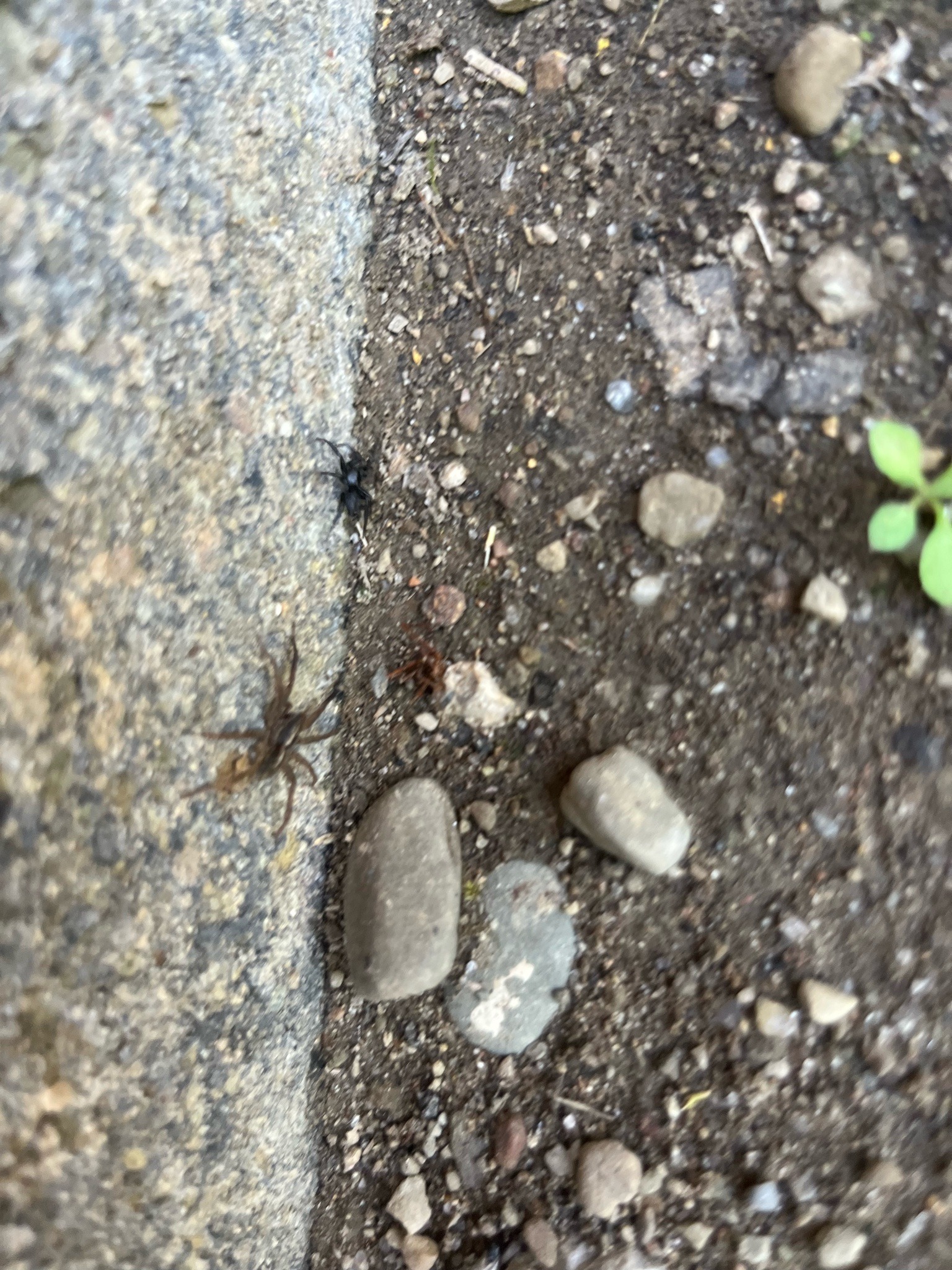
Wolf Spider
Lycosidae
- Order & Family
- Araneae: Lycosidae
- Size
- 10 to 35 mm (0.4 to 1.38 inches) in body length depending on the species.
Natural Habitat
Gardens, grasslands, woodlands, and urban areas, often found on the ground among leaf litter, under rocks, or near structure foundations.
Diet & Feeding
Carnivorous; they primarily eat ground-dwelling insects like crickets, beetles, and ants, as well as other small spiders.
Behavior Patterns
Unlike many spiders, they do not spin webs to catch prey. Instead, they are agile hunters that chase down and pounce on their targets. Females are known for carrying their egg sacs attached to their spinnerets and later carrying their spiderlings on their backs.
Risks & Benefits
Benefits include natural pest control by eating common invasive insects. Risks to humans are minimal; they have venom but generally only bite if provoked, and their bite is usually no more severe than a bee sting for those without allergies.