
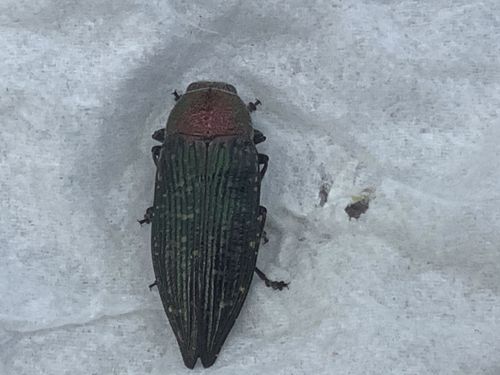
Metallic Wood-Boring Beetle, Jewel Beetle
Buprestidae (general family name, specific species is difficult to determine from image alone)
- Order & Family
- Order: Coleoptera, Family: Buprestidae
- Size
- Typically 3 mm to 100 mm (0.12 to 4 inches), though most common species are between 10-30 mm.
Natural Habitat
Forests, woodlands, orchards, and urban areas with trees, as their larvae develop in wood.
Diet & Feeding
Adults generally feed on pollen, nectar, or sometimes leaves, depending on the species. Larvae, known as flatheaded borers, feed on the phloem and xylem of trees, specifically dead, dying, or stressed trees, though some species attack healthy trees.
Behavior Patterns
Adults are active flyers and are often found on or near their host trees during warm daylight hours. Females lay eggs in bark crevices. Larvae bore into the wood, feeding on the phloem and xylem, creating serpentine galleries under the bark. They pupate within the wood.
Risks & Benefits
Risks: Many species are significant pests of trees, particularly hardwood and conifer species, causing damage that can lead to tree death. The Emerald Ash Borer (Agrilus planipennis), a highly destructive invasive species in this family, is a major example. Benefits: Some species contribute to the decomposition of dead wood, playing a role in forest ecosystems.