
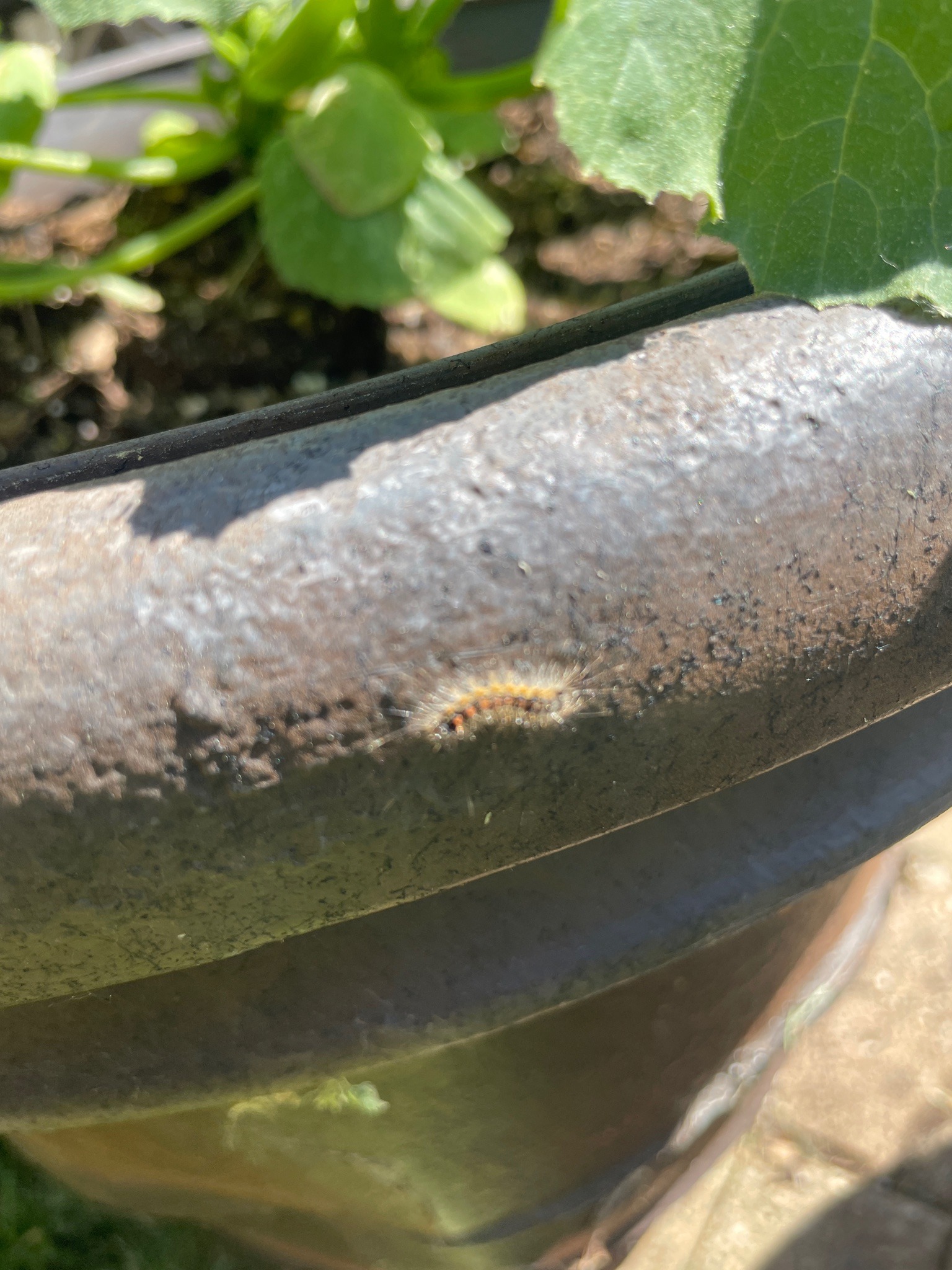
Community identification
Rusty Tussock Moth Caterpillar (Vapourer Moth)
Orgyia antiqua
- Order & Family
- Order: Lepidoptera; Family: Erebidae
- Size
- 20mm to 35mm (approximately 0.8 to 1.4 inches) in length.
Natural Habitat
Woodlands, parks, gardens, and urban areas across Europe, North Africa, and parts of North America.
Diet & Feeding
Polyphagous; larvae feed on the leaves of various deciduous trees and shrubs, including oak, willow, birch, and fruit trees.
Behavior Patterns
Larvae are active during the day and are known for their distinct hair tufts. Females are wingless and stay near their cocoons to lay egg masses. They undergo complete metamorphosis.
Risks & Benefits
Risks: The hairs (setae) can cause skin irritation or allergic reactions in humans (urticating hairs). Large populations can cause minor defoliation in gardens. Benefits: They serve as a food source for birds and parasitic wasps.