
Community identification
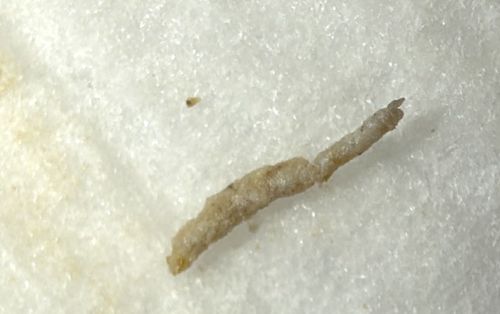
Case-bearing Clothes Moth Larva
Tinea pellionella
- Order & Family
- Order: Lepidoptera, Family: Tineidae
- Size
- Larvae are roughly 6-10 mm long; the distinctive case is slightly larger than the larva inside.
Natural Habitat
Indoor environments, particularly in dark closets, drawers, or under furniture where natural fibers (wool, silk, fur) are stored.
Diet & Feeding
Keratin-rich organic materials such as wool, silk, fur, feathers, hair, felt, and sometimes stored grains.
Behavior Patterns
The larva builds and drags a portable, protective tube-like case made of silk and debris (sand, fibers) around with it while feeding. They attach the case to a surface to molt or pupate. They typically avoid light.
Risks & Benefits
Risks: A household pest that causes damage to clothing, carpets, and upholstery made from natural animal fibers. Benefits: No significant benefits to humans; in nature, they aid in decomposition of animal matter.