
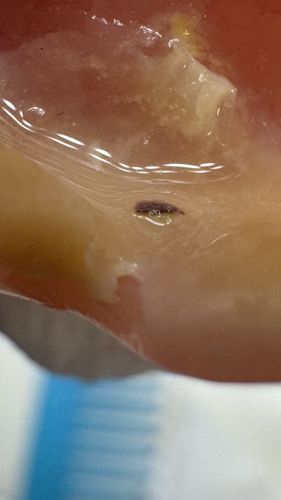
Fruit Fly Larva (Maggot)
Drosophila melanogaster (typical, but species may vary)
- Order & Family
- Diptera (True Flies), Drosophilidae (Vinegar Flies)
- Size
- 2-5 millimeters (adults are 2-4 mm, larvae are often similar in length)
Natural Habitat
Found in decaying organic matter, especially rotting fruits and vegetables; also in fermented substances like vinegar or wine.
Diet & Feeding
Feeds on yeast and microorganisms found in rotting fruits, vegetables, and other fermenting organic material.
Behavior Patterns
Larvae develop rapidly within the decaying substrate, undergoing several instars before pupating. They are typically found burrowing within the food source. Adults are attracted to overripe and fermenting produce to lay eggs.
Risks & Benefits
Potential risks include being a pantry/food pest, spoiling food, and carrying bacteria from spoiled surfaces to fresh produce. Rarely, they can cause accidental myiasis if consumed. Benefits primarily lie in their role as decomposers in ecosystems and as a widely used model organism in genetic research (due to D. melanogaster's short life cycle and ease of breeding).