
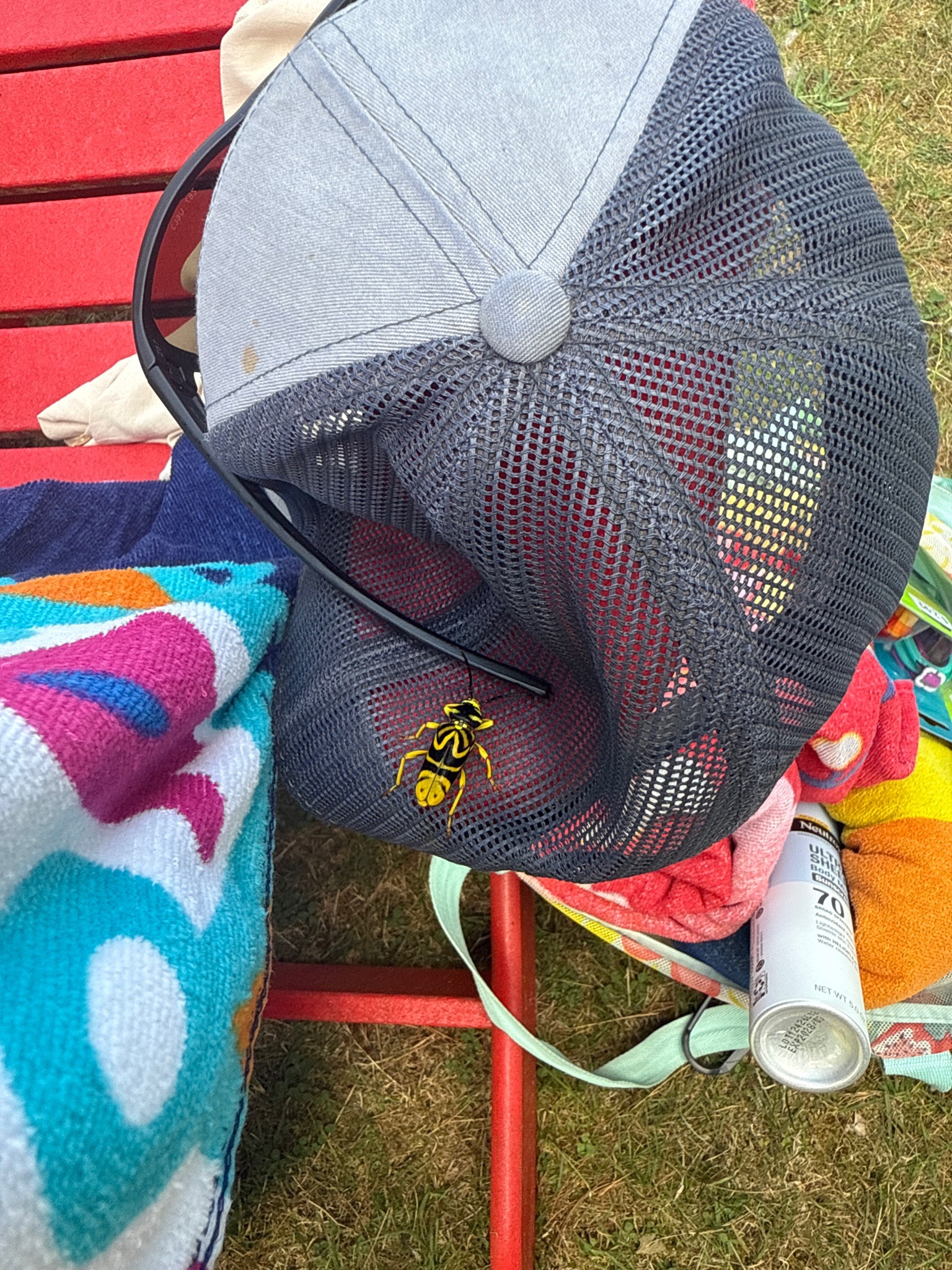
Community identification
Locust Borer
Megacyllene robiniae
- Order & Family
- Coleoptera: Cerambycidae
- Size
- 11 to 28 mm (approximately 0.4 to 1.1 inches)
Natural Habitat
Found in parks and gardens where black locust trees (Robinia pseudoacacia) grow; adults are frequently seen on goldenrod flowers.
Diet & Feeding
Adults feed on pollen and nectar, primarily from goldenrod; larvae bore into the heartwood of black locust trees to feed.
Behavior Patterns
Active during late summer and autumn; they exhibit Batesian mimicry by resembling wasps in their coloration and movement to deter predators.
Risks & Benefits
Generally harmless to humans (does not sting); however, the larvae are considered a serious pest as they can weaken or kill black locust trees by tunneling through the wood.