
Community identification
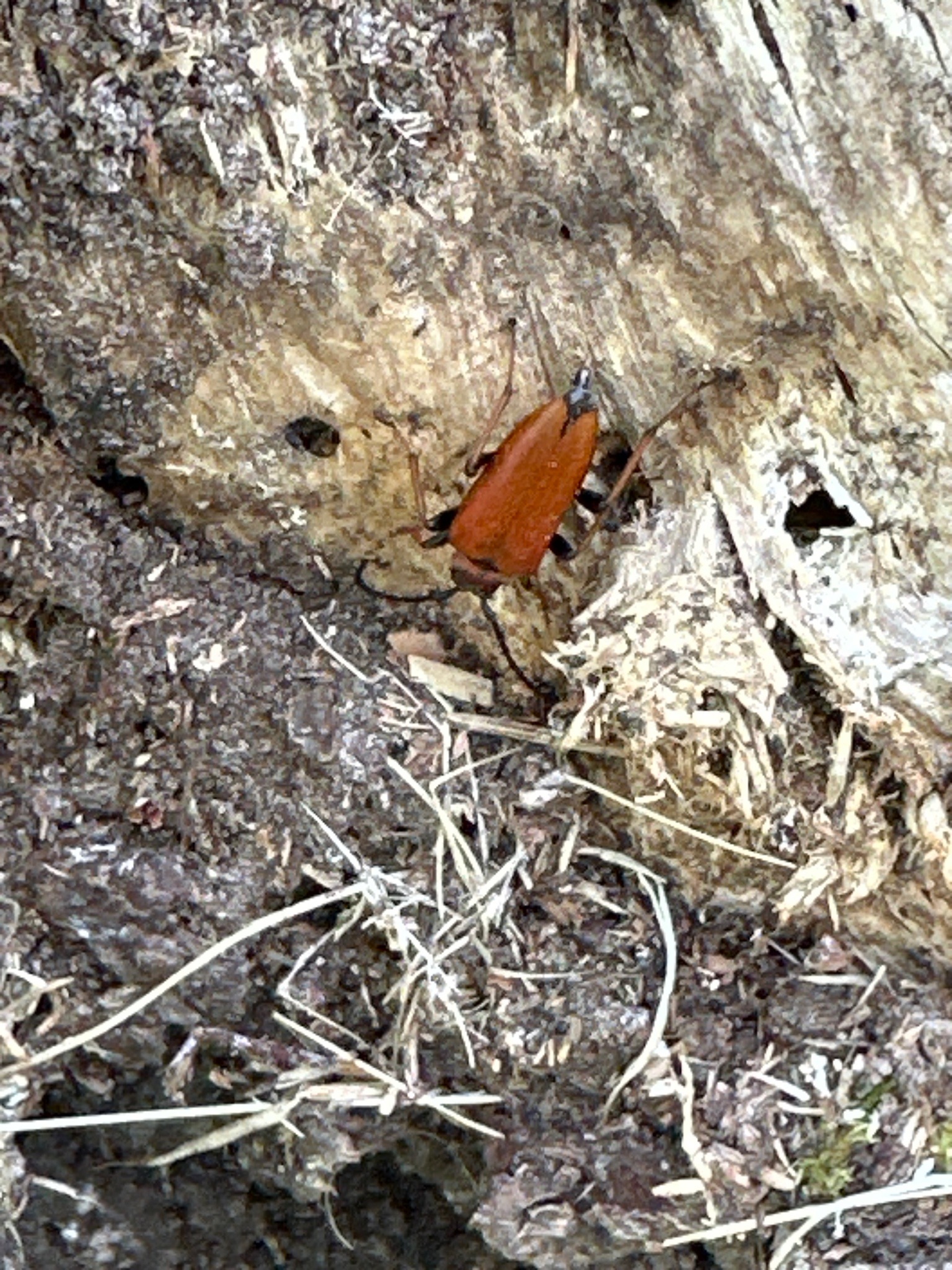
Red-femured Flower Borer
Stictoleptura canadensis
- Order & Family
- Coleoptera: Cerambycidae
- Size
- 10 - 20 mm in length
Natural Habitat
Found in coniferous or mixed forests, often seen on dead or dying trees and on flowering plants.
Diet & Feeding
Adults feed on pollen and nectar from flowers; larvae are wood-borers that feed on the decaying wood of coniferous trees like pine, spruce, and balsam fir.
Behavior Patterns
Diurnal insects most active in mid to late summer. Adults are frequent flower visitors, while females lay eggs in the crevices of dead bark. The larvae spend one to two years developing inside the wood.
Risks & Benefits
No risk to humans as they do not bite or sting. They provide ecological benefits by assisting in the decomposition of dead wood and acting as pollinators for various wildflowers.