
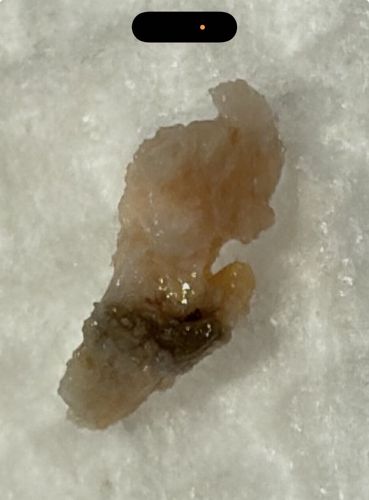
Community identification
Tonsil Stone (Tonsillolith)
Tonsillolith
- Order & Family
- N/A (Not an insect or bug; a biological calcification formed in lymph tissue)
- Size
- Typically varies from 1mm to over 1cm, though most are small and rice-sized.
Natural Habitat
Located within the crypts (crevices) of the palatine tonsils in the human throat.
Diet & Feeding
N/A (This is a collection of debris, bacteria, and calcified material, not a living organism).
Behavior Patterns
Accumulates slowly over time as bacteria, food particles, mucus, and dead cells get trapped in tonsil crypts. They often harden due to calcification and can be dislodged by coughing or eating.
Risks & Benefits
Risks: Not infectious or dangerous, but major cause of chronic bad breath (halitosis), throat discomfort, sensation of something stuck in the throat, and occasional inflammation. Benefits: None.