
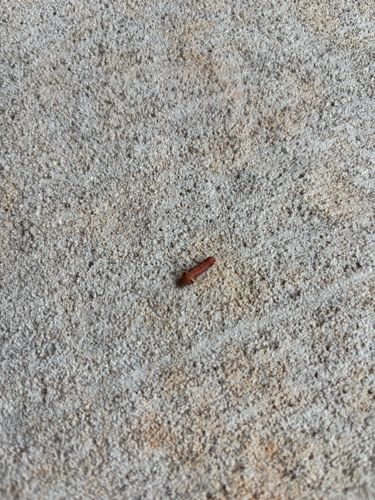
Scarab Beetle Larva (Grub)
Various species within Scarabaeidae (too indistinct to specify a single species)
- Order & Family
- Order: Coleoptera, Family: Scarabaeidae
- Size
- Larvae can range from a few millimeters to several centimeters long, depending on the species. The one in the image appears to be on the smaller side, likely under 1-2 cm.
Natural Habitat
Underground in soil, especially in lawns, gardens, and agricultural fields. Also found in decaying logs and compost piles depending on the species.
Diet & Feeding
Larval scarabs (grubs) are typically phytophagous, feeding on plant roots (e.g., turf, crops). Some species feed on decaying wood or detritus.
Behavior Patterns
Larvae (grubs) primarily live underground or in decaying wood, feeding on roots or wood. Adults typically emerge in late spring/early summer, flying to find mates. Many scarab larvae have a C-shaped posture.
Risks & Benefits
Risks: Many species are significant agricultural and turf pests, causing damage to crops, lawns, and golf courses by feeding on roots. Benefits: Some species are important decomposers, breaking down dead organic matter. Others can be beneficial predators of other insect larvae. Certain species are indicators of ecosystem health.