
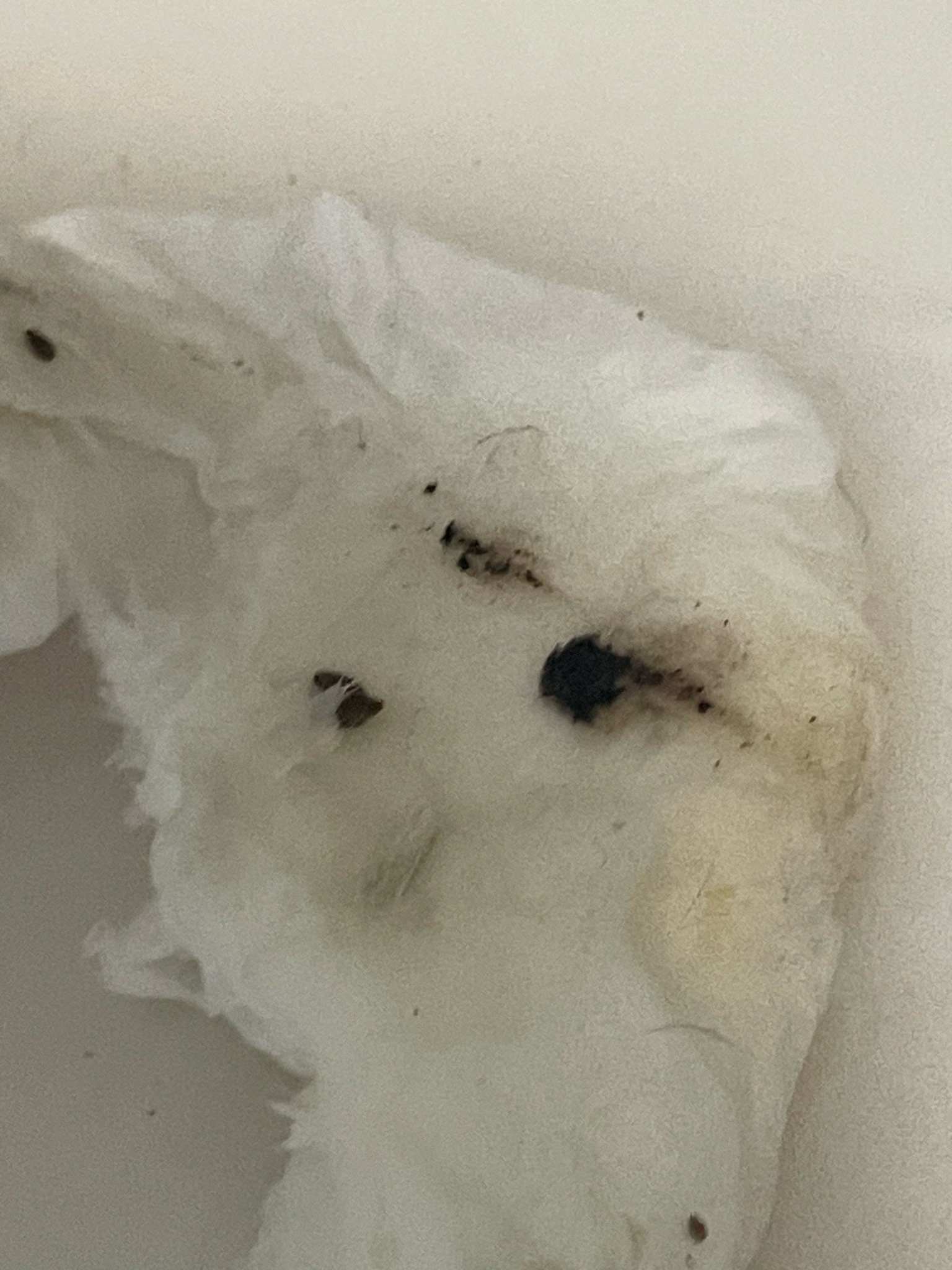
Cat Flea (or Dog Flea) and Flea Dirt
Ctenocephalides felis / Ctenocephalides canis
- Order & Family
- Siphonaptera, Pulicidae
- Size
- 1.5 - 3 mm (adults)
Natural Habitat
Domestic environments, pet bedding, carpets, upholstery, and the fur of host animals (cats, dogs, wildlife).
Diet & Feeding
Adults are obligate hematophages that feed on the blood of mammals and birds; larvae feed on organic debris, especially adult flea excrement (digested blood).
Behavior Patterns
Wingless insects adapted for jumping with powerful hind legs. Females lay eggs on host animals, which drop off into indoor environments. The dark specks shown are flea dirt (fecal matter consisting of digested blood) which turns reddish-brown when wet.
Risks & Benefits
Risks: Causes intense itching, flea allergy dermatitis, tapeworm infections (Dipylidium caninum), and can transmit diseases like murine typhus or Bartonella; infests homes rapidly. Benefits: None to humans or pets; serves minor role in wild food webs.