
Community identification
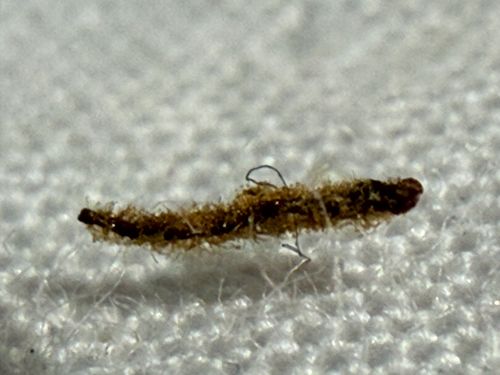
Casemaking Clothes Moth larva
Tinea pellionella
- Order & Family
- Lepidoptera: Tineidae
- Size
- Larvae are typically 6-10 mm (around 1/4 to 3/8 inch) in length.
Natural Habitat
Dark, undisturbed areas in homes, such as closets, under furniture, or rugs, where there is a source of keratin-based material.
Diet & Feeding
Animal-based fibers containing keratin, including wool, fur, silk, feathers, felt, hair, and sometimes leather.
Behavior Patterns
Larvae weave a portable silken case incorporating debris and fibers from their food source. They carry this case as they feed and eventually pupate inside it. Unlike webbing clothes moths, these larvae are active and can crawl significant distances.
Risks & Benefits
Risks: Significant household pest that causes damage to clothing, upholstery, and carpets. Benefits: Serves an ecological role outdoors as a scavenger of animal remains like fur and feathers.