
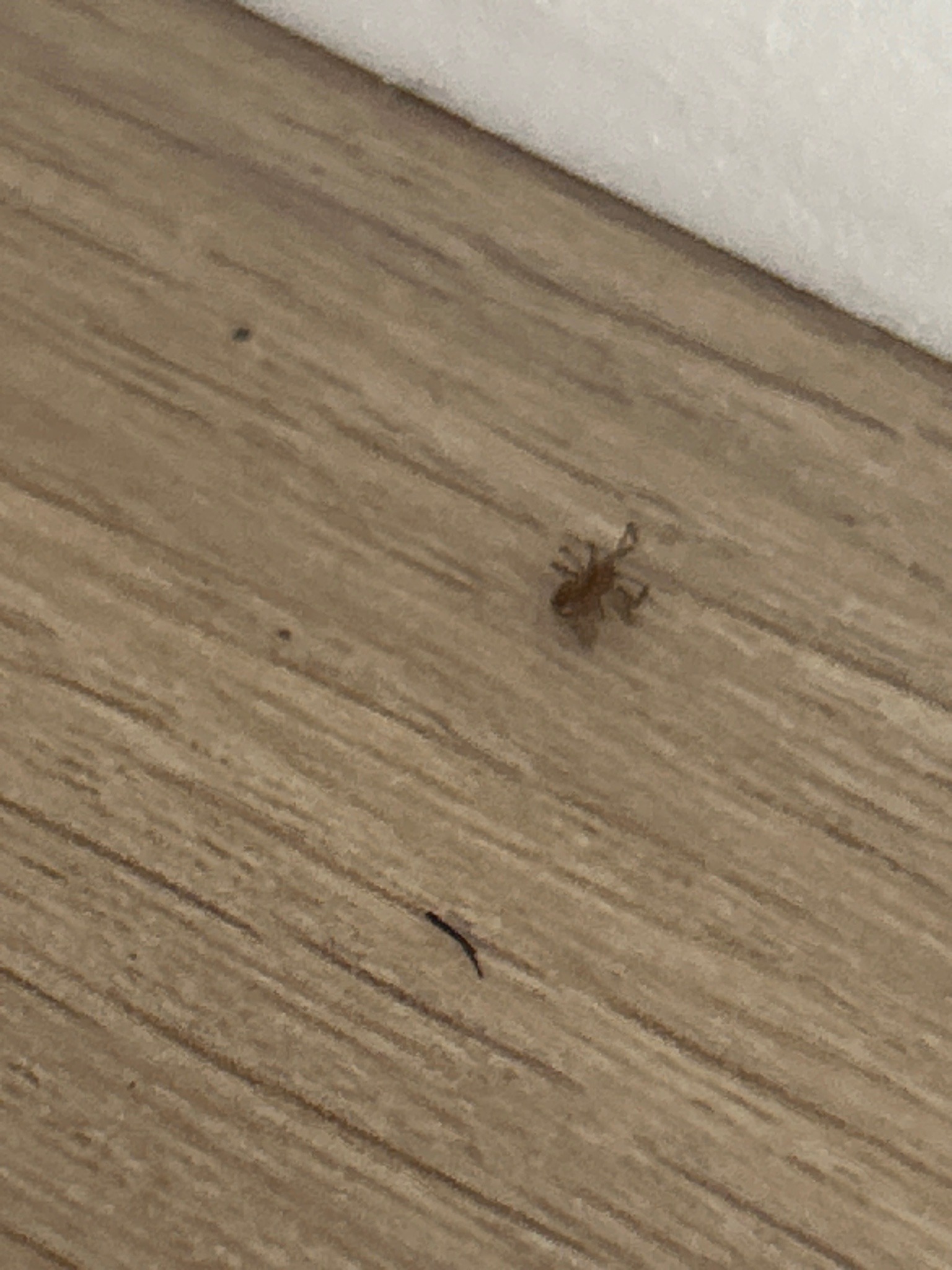
Community identification
Pseudoscorpion
Chelifer cancroides (common example species)
- Order & Family
- Order Pseudoscorpiones; various families (e.g., Cheliferidae)
- Size
- 2 to 8 millimeters (0.08 to 0.31 inches)
Natural Habitat
Damp environments, leaf litter, under tree bark, and occasionally indoors in bathrooms, kitchens, or libraries.
Diet & Feeding
Carnivorous; they feed on small arthropods like booklice, mites, springtails, and small fly larvae.
Behavior Patterns
They are solitary, nocturnal predators that use their pincer-like pedipalps to capture prey. Some species hitch rides on larger insects to move to new locations, a behavior known as phoresy.
Risks & Benefits
They are harmless to humans and pets as they lack a stinger and their mouthparts cannot pierce skin. They are beneficial to the ecosystem and homes because they act as natural pest control against common household pests like booklice.