
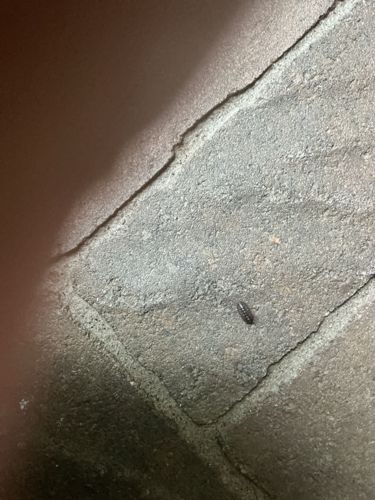
Woodlouse (or Sowbug, Pill Bug)
Numerous species within Oniscidea. Common examples include Porcellio scaber (common rough woodlouse) or Armadillidium vulgare (common pill bug).
- Order & Family
- Order Isopoda, suborder Oniscidea (terrestrial isopods). Family examples include Porcellionidae, Armadillidiidae, Oniscidae.
- Size
- Most common species range from 0.5 to 1.5 cm (0.2 to 0.6 inches) in length, though some larger species can reach up to 2 cm (0.8 inches).
Natural Habitat
Woodlice require damp environments to survive as they breathe through gills that need to stay moist. They are commonly found under rocks, logs, leaf litter, decaying wood, compost piles, and in damp soil. They can also be found in basements, sheds, and other sheltered, moist areas around human dwellings.
Diet & Feeding
Woodlice are detritivores, meaning they feed on decaying organic matter. Their diet primarily consists of dead plant material such as rotting wood, leaves, and fungi. They can also consume algae and sometimes scavenge on decaying animal matter. They play a crucial role in decomposition.
Behavior Patterns
Woodlice are primarily nocturnal and prefer dark, damp environments. They are known for their 'congregating' behavior, often found in clusters under objects. They do not sting or bite and are generally slow-moving. When disturbed, some species, like the pill bug (Armadillidium vulgare), can roll into a球 (ball) for protection, while others, like the common rough woodlouse (Porcellionides pruinosus), will simply try to scurry away.
Risks & Benefits
Potential risks: Generally harmless to humans. They do not transmit diseases and are not known to bite. In large numbers, they might occasionally damage seedlings or soft plant tissues in gardens if other food sources are scarce, but this is uncommon. Benefits: They are beneficial decomposers in ecosystems, breaking down dead plant material and returning nutrients to the soil. This process helps create healthier soil for plants. They are also a food source for various predators like spiders, centipedes, and some birds.