
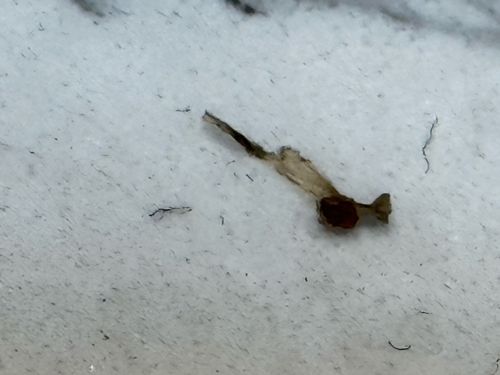
Community identification
Pharaoh Ant (Incomplete/Damaged Specimen)
Monomorium pharaonis
- Order & Family
- Order: Hymenoptera; Family: Formicidae
- Size
- 1.5 to 2 mm in length (adult workers)
Natural Habitat
Commonly found indoors in kitchens, bathrooms, and wall voids; prefers warm, humid areas with proximity to food and water.
Diet & Feeding
Omnivorous; they feed on a variety of foods including sweets, proteins, and fats. They are known for scavenging and can even consume wound dressings in medical settings.
Behavior Patterns
They form large, multi-queen colonies and exhibit 'budding,' where part of the colony splits off to start a new nest, making them difficult to control. They move in distinct trails.
Risks & Benefits
Risks: Major household and hospital pest. They can mechanically transmit pathogens like Salmonella, Staphylococcus, and Pseudomonas. No significant benefits to humans in urban environments.