
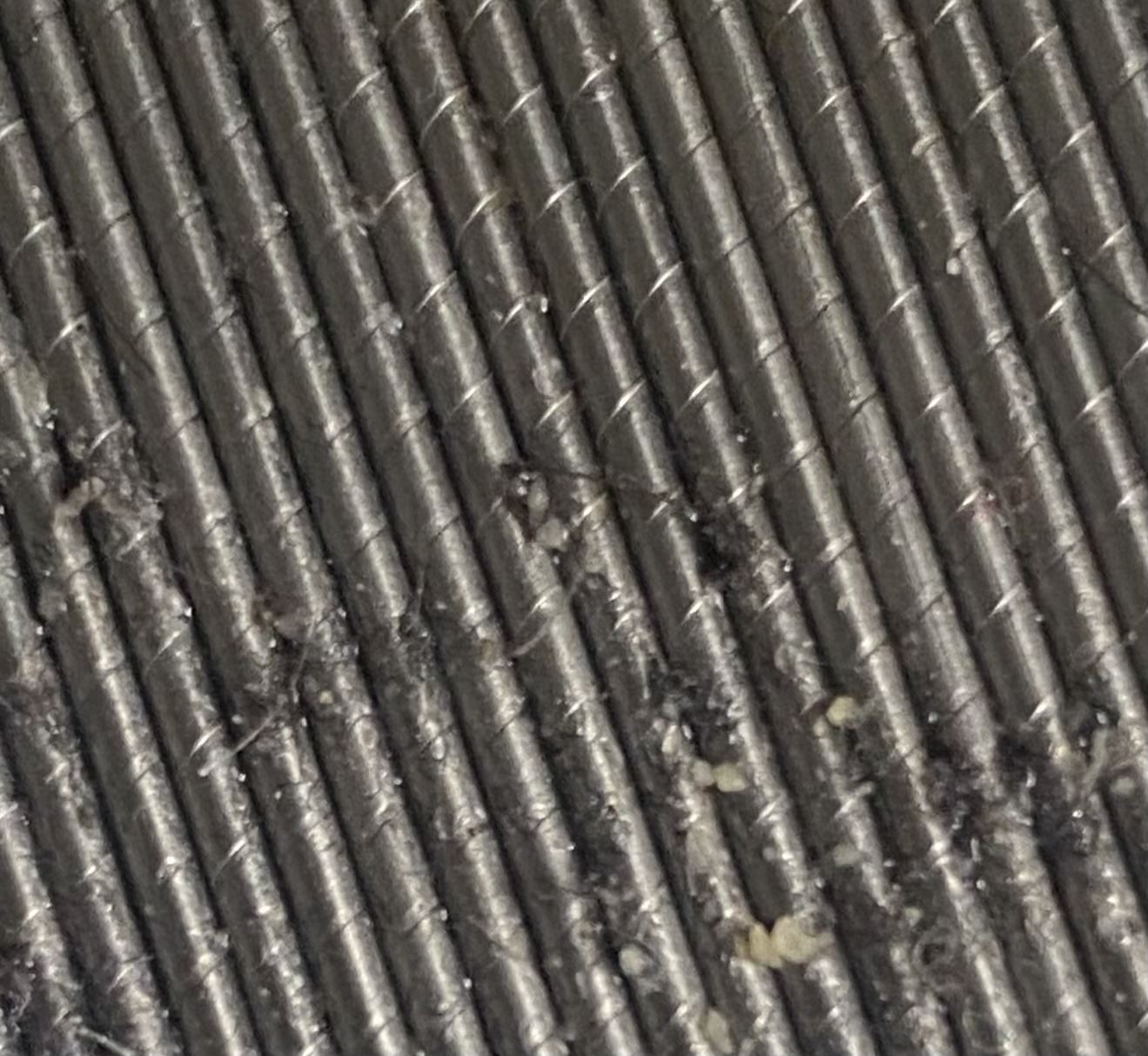
Community identification
Mold Mite (also known as Grain Mite or Dust Mite depending on specific context)
Tyrophagus putrescentiae
- Order & Family
- Order: Sarcoptiformes; Family: Acaridae
- Size
- 0.3–0.5 mm (nearly microscopic, appearing as white dust or lint to the naked eye)
Natural Habitat
High humidity environments with organic matter, often found on damp building materials, HVAC coils, kitchens, and stored food products.
Diet & Feeding
Primarily feeds on mold, fungi, and decaying organic matter; can also consume high-protein stored foods like seeds, nuts, and cheese.
Behavior Patterns
Rapid reproduction in warm, humid conditions; they congregate in large numbers where mold is present, often appearing as a moving white dust.
Risks & Benefits
Risks include allergic reactions, asthma exacerbation, and skin irritation in humans; they can also contaminate stored food. Benefits are negligible, though they contribute to the breakdown of organic waste in external environments.