
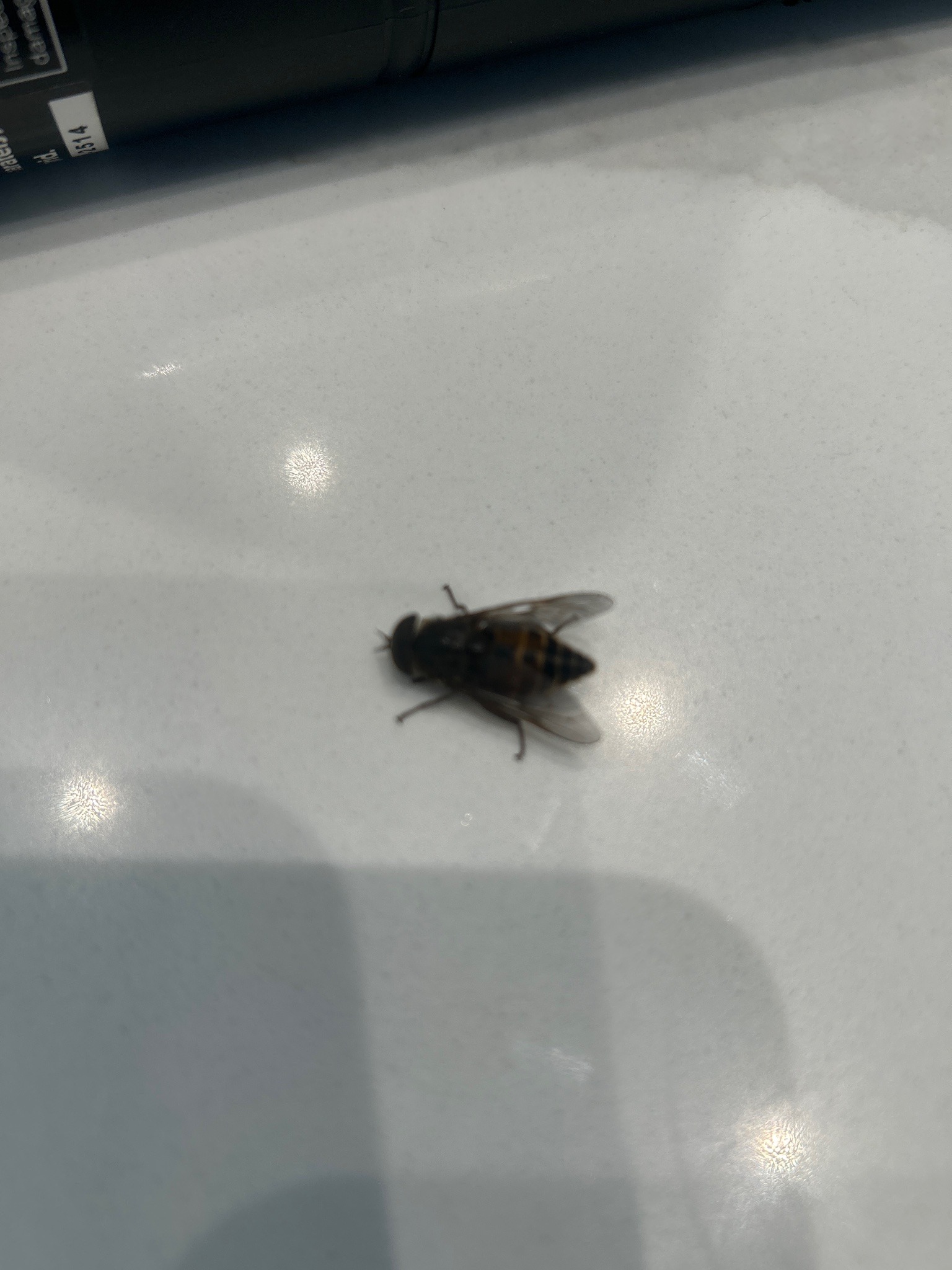
Community identification
Horsefly
Tabanus spp.
- Order & Family
- Order: Diptera, Family: Tabanidae
- Size
- 10 mm to 25 mm (0.4 to 1.0 inch)
Natural Habitat
Near wetlands, ponds, streams, and pastures where moisture is abundant for larvae development.
Diet & Feeding
Adult females feed on vertebrate blood (including humans and livestock) for egg development, while males and non-breeding females feed primarily on nectar and plant sap.
Behavior Patterns
Active during the day and particularly attracted to movement, warmth, dark colors, and carbon dioxide. Females deliver painful bites using scissor-like mouthparts.
Risks & Benefits
Risks include painful bites that can cause irritation, allergic reactions, and the potential transmission of certain animal diseases (such as swamp fever). Benefits are minimal, though they serve as food for birds and larger predators.