
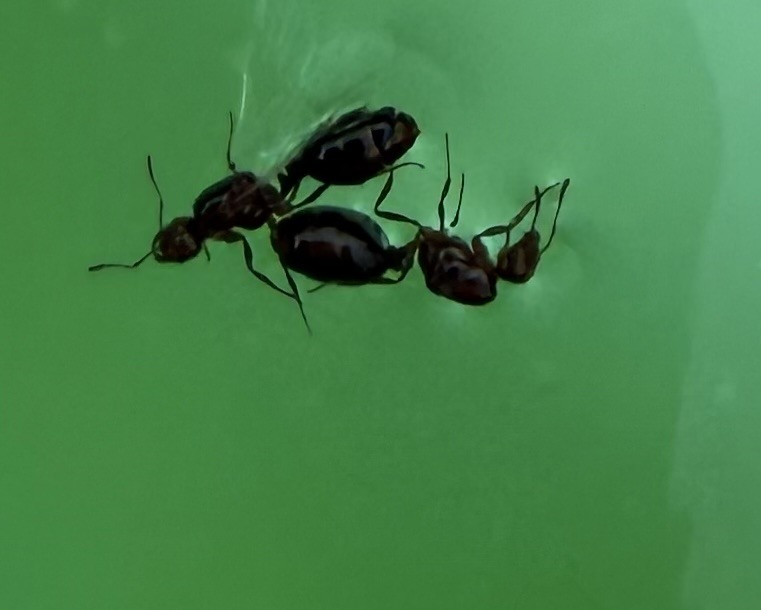
Community identification
Carpenter Ant
Camponotus ssp.
- Order & Family
- Hymenoptera: Formicidae
- Size
- 3.5 mm to 13 mm (workers) and up to 25 mm (queens)
Natural Habitat
Woodlands, gardens, and residential areas; nesting in moist or decaying wood such as logs or structural timber.
Diet & Feeding
Omnivorous; feeds on honeydew from aphids, insect secretions, sugary substances, and other proteins.
Behavior Patterns
Eusocial insects with caste systems. Often active at night; they do not eat wood but excavate galleries to build nests. They participate in nuptial flights involving winged reproductive members.
Risks & Benefits
Benefits the ecosystem by aerating soil and decomposing wood. Risks include structural damage to homes if nests are established in building timbers, and they can deliver a painful bite but lack a stinger.