
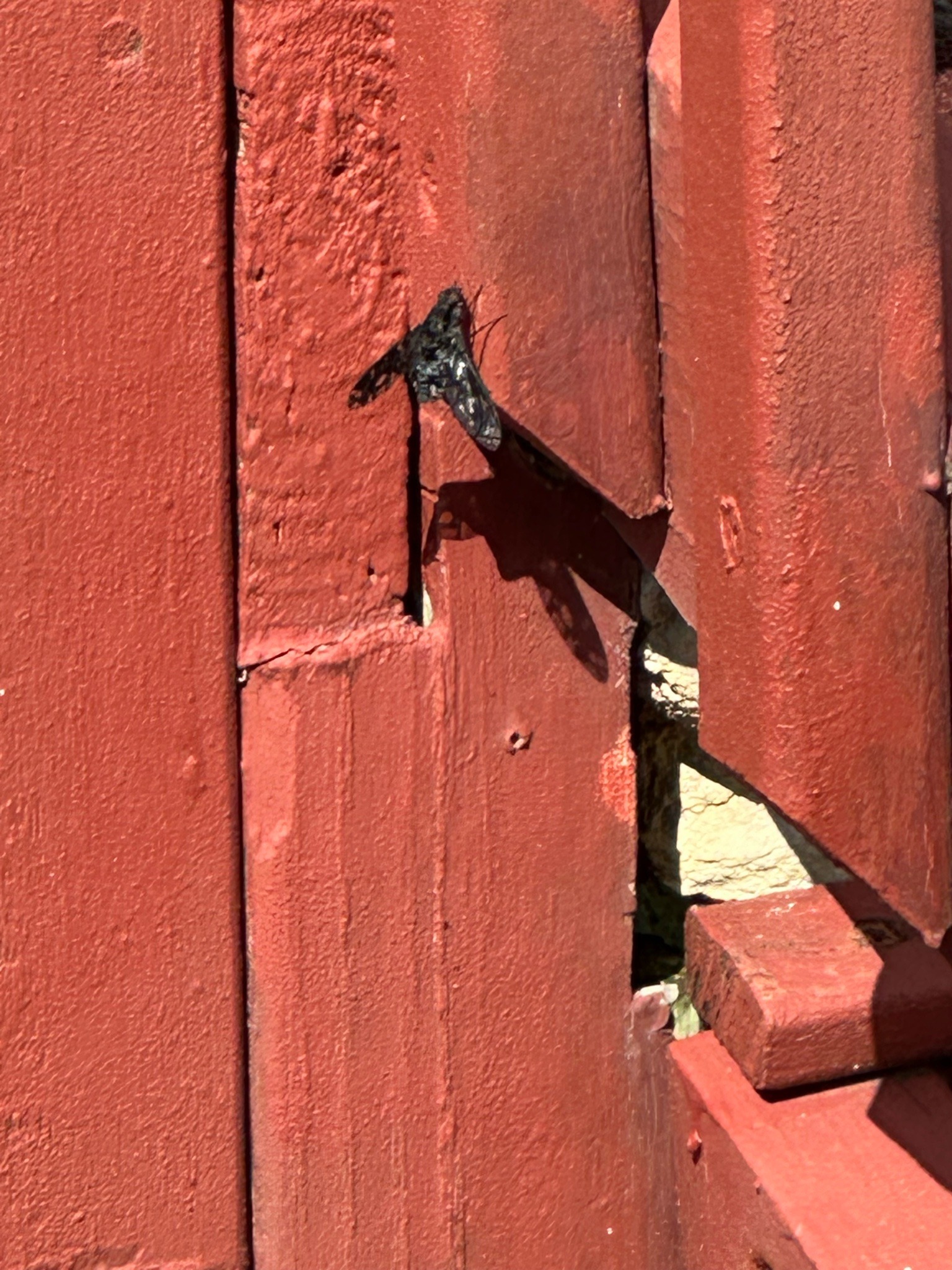
Community identification
Tiger Bee Fly
Xenox tigrinus
- Order & Family
- Diptera: Bombyliidae
- Size
- 15 to 20 millimeters in length
Natural Habitat
Eastern and Central North America, commonly found around woodlands and near wooden structures where carpenter bees nest.
Diet & Feeding
Adults feed on nectar from flowers; larvae are parasitoids that consume the larvae of carpenter bees.
Behavior Patterns
They are often seen hovering or resting near wooden structures. Females deposit eggs near the tunnels of carpenter bees so their larvae can enter and feed on the developing bee larvae.
Risks & Benefits
Harmless to humans as they do not sting or bite; they provide ecological benefits by helping control carpenter bee populations, which can damage wooden structures.