
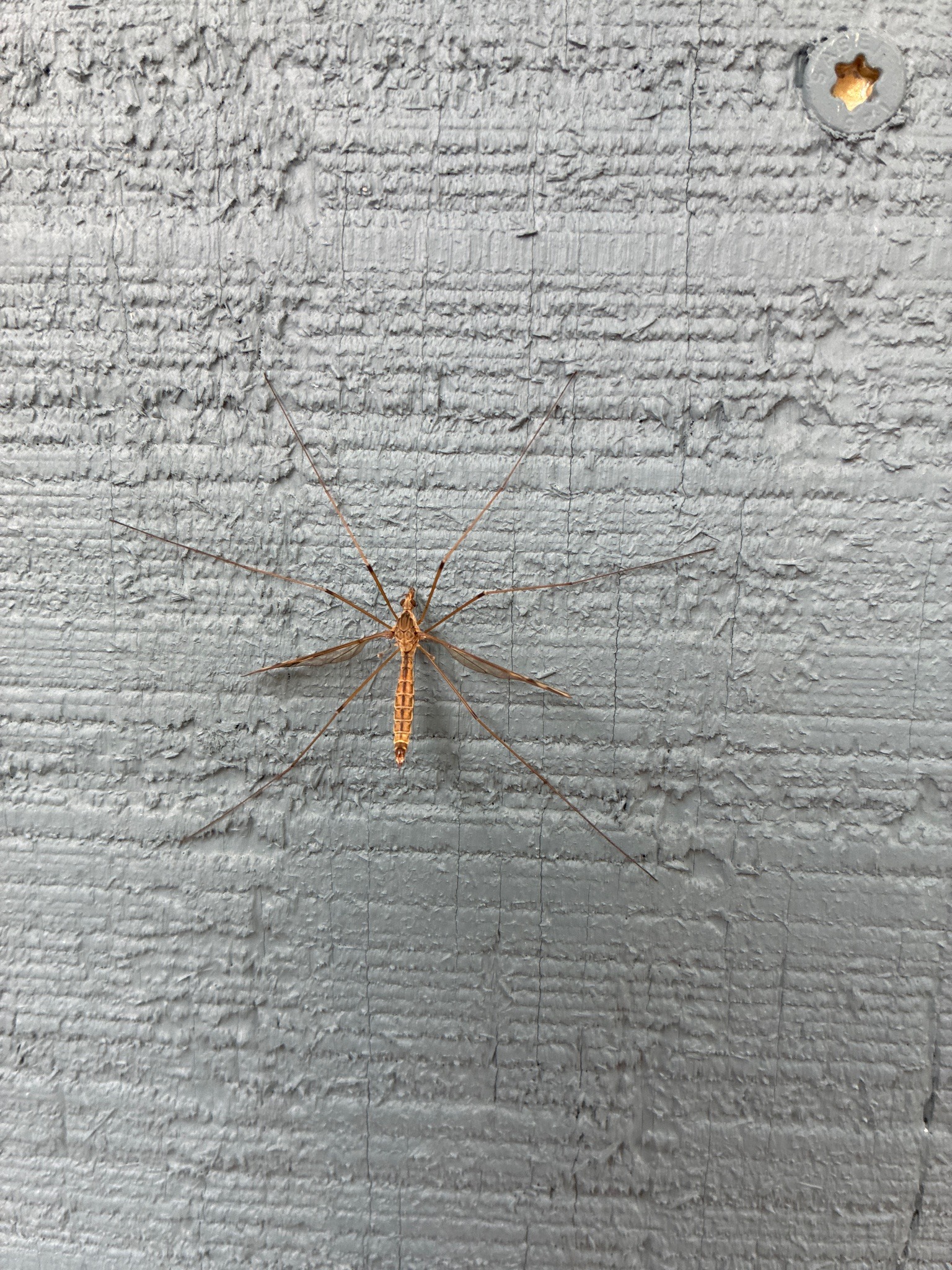
Crane Fly
Tipulidae (family)
- Order & Family
- Order: Diptera, Family: Tipulidae
- Size
- Body length typically 10 to 65 mm (0.4 to 2.5 inches), though leg span can make them appear much larger.
Natural Habitat
Widely distributed in temperate and tropical regions, often found near moist areas like wetlands, meadows, and forests where larvae (leatherjackets) can develop in soil or water.
Diet & Feeding
Adults typically do not feed or only consume liquids like nectar; larvae feed on decaying organic matter, plant roots, and occasionally other small invertebrates.
Behavior Patterns
Active primarily at dawn or dusk (crepuscular); known for a clumsy flying style. Their life cycle includes an aquatic or semi-aquatic larval stage before emerging as winged adults for a short mating period.
Risks & Benefits
Harmless to humans as they do not bite or sting despite looking like giant mosquitoes. They are beneficial to the ecosystem as soil aerators and as a food source for birds, fish, and other wildlife.