
Community identification
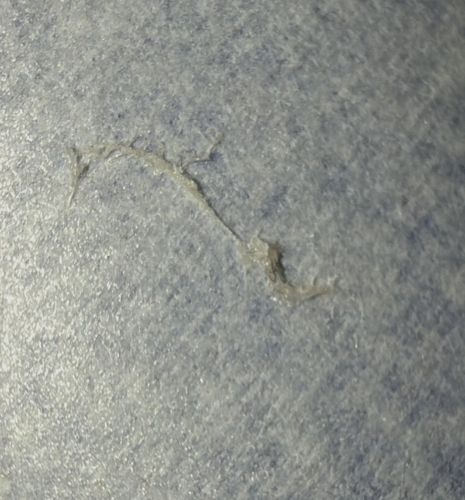
Webbing Clothes Moth Larva (or associated silken debris)
Tineola bisselliella
- Order & Family
- Lepidoptera / Tineidae
- Size
- Larvae grow up to 10-12 mm (approx. 1/2 inch) in length.
Natural Habitat
Dark, undisturbed areas in homes such as closets, drawers, and on carpets or upholstered furniture, particularly where natural fibers (wool, silk) are present.
Diet & Feeding
Keratin-rich materials including wool, fur, silk, feathers, pet hair, and lint.
Behavior Patterns
Larvae spin silken tubes or tunnels to travel through and feed upon fabrics; they tend to graze along surfaces rather than building a portable case like their cousin the Case-bearing Clothes Moth.
Risks & Benefits
Risk: Significant household pest that causes damage to clothing, rugs, and upholstery by eating holes in fabrics. Not harmful to humans directly (does not bite). Benefit: None in a household context.