
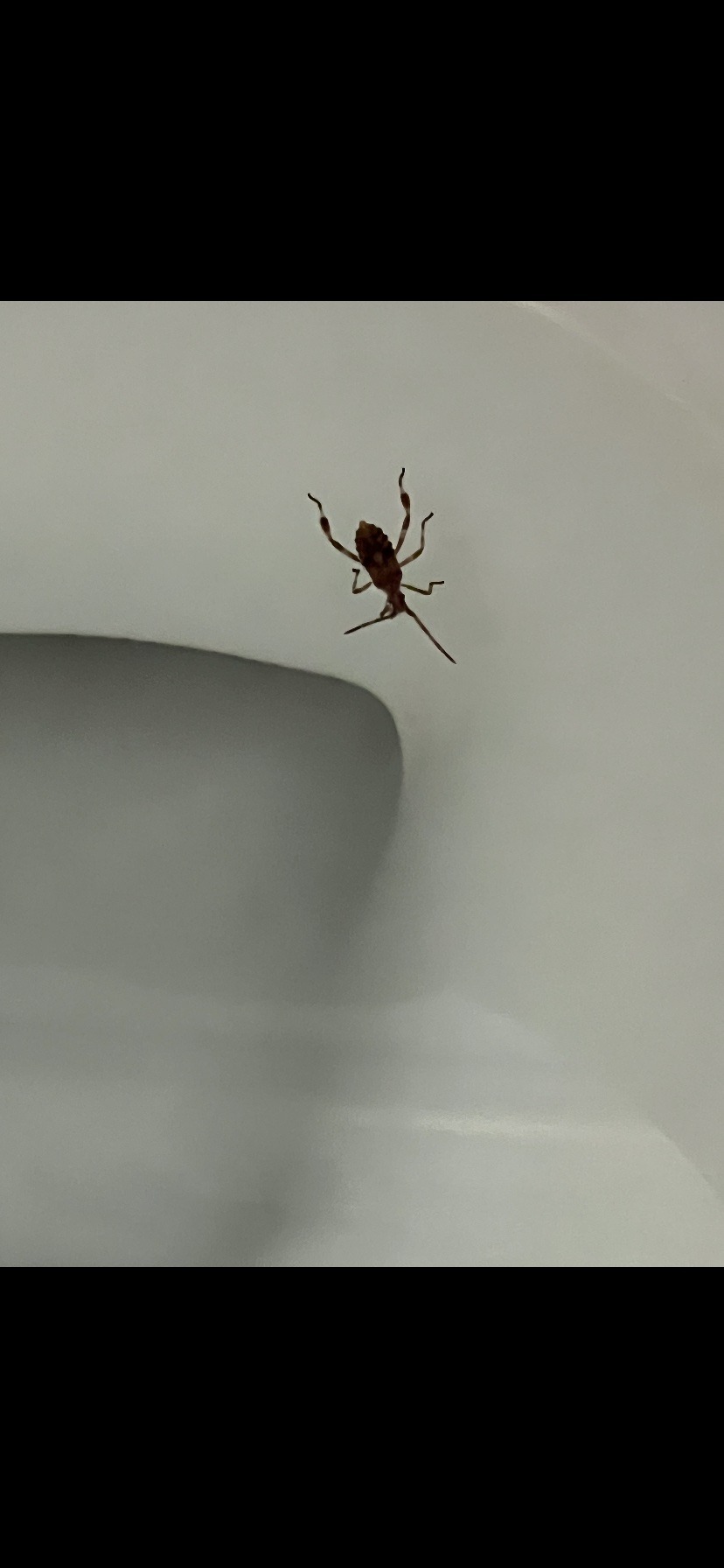
Community identification
Western Conifer Seed Bug nymph
Leptoglossus occidentalis
- Order & Family
- Hemiptera: Coreidae
- Size
- Nymphs are smaller than the 16-20 mm adults, typically 5-15 mm depending on developmental stage.
Natural Habitat
Coniferous forests, woodlands, and frequently dwellings during autumn and winter.
Diet & Feeding
Herbivorous; they use piercing-sucking mouthparts to feed on the developing seeds and cones of various conifers like pine and Douglas-fir.
Behavior Patterns
Nymphs undergo five developmental stages (instars) and are active in summer. They are known for seeking warmth in buildings during cold months and can emit a pungent defensive odor if disturbed.
Risks & Benefits
They are harmless to humans and do not bite, sting, or carry diseases. However, they can be a nuisance pest in homes and may cause minor damage to seed crops in forestry.