
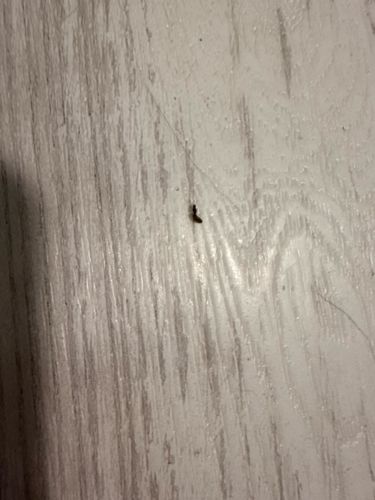
Ant
Formicidae (family)
- Order & Family
- Order: Hymenoptera, Family: Formicidae
- Size
- Most ant species range from 2 to 25 mm (0.08 to 1 inch) in length. The ant in the image appears to be on the smaller end of this range, likely around 2-5 mm.
Natural Habitat
Ants are found in nearly every terrestrial habitat on Earth, adapting to forests, deserts, urban environments, and even homes. They typically build nests underground, in wood, under rocks, or within structures, often seeking out warm, moist, or secure locations.
Diet & Feeding
Ants are omnivores; their diet varies widely by species. Many consume nectar, seeds, fungi, or insects (live or dead). Some species are known to tend aphids for their honeydew (a sugary excretion). The specific ant in the image, given its small size and indoor location, is likely a species that forages for crumbs, sugars, and greases.
Behavior Patterns
Ants are highly social insects that live in structured colonies which can range in size from a few dozen to millions. They are known for their organized foraging, where scout ants find food and then recruit other ants through pheromone trails. Most species are active during the day, though some can be nocturnal. They communicate through chemical signals (pheromones) and tactile interactions. Ants undergo complete metamorphosis (egg, larva, pupa, adult).
Risks & Benefits
Ants can be considered pests when they invade homes searching for food, contaminate food supplies, or, in some species, deliver painful bites or stings. Some species, like carpenter ants, can cause structural damage to wood. However, ants also provide significant ecological benefits. They play crucial roles in nutrient cycling, soil aeration, seed dispersal, and as predators of other insects, helping to control pest populations.