
Community identification
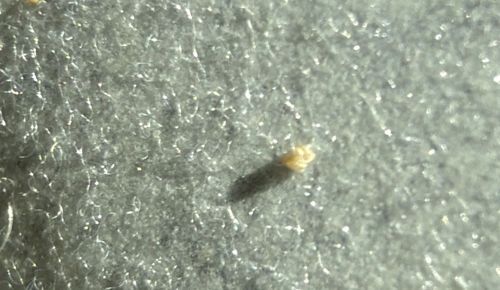
Clothing moth larva (Casemaking clothes moth)
Tinea bisselliella / Tinea pellionella
- Order & Family
- Order: Lepidoptera, Family: Tineidae
- Size
- 1 mm up to 12 mm (larval stage)
Natural Habitat
Indoor environments, particularly dark, undisturbed areas such as closets, chests, or under furniture where natural fibers are stored.
Diet & Feeding
Natural protein-based fibers including wool, silk, fur, feathers, and leather, as well as lint and dust containing hair or skin cells.
Behavior Patterns
The larvae spin protective silken cases or webs as they feed. They avoid light and are most active in secluded spots. They undergo complete metamorphosis (egg, larva, pupa, adult).
Risks & Benefits
They do not bite or pose a direct health risk to humans, but can cause significant economic damage to clothing, upholstery, and rugs. They serve no specific ecological benefit in a home environment.