
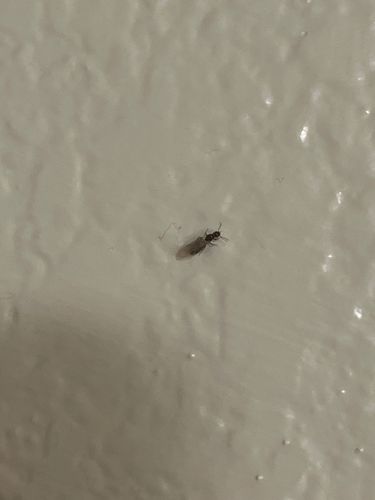
Winged Termite (Alate)
Reticulitermes spp. (Subterranean Termites) or Kalotermes spp. / Incisitermes spp. (Drywood Termites) – specific species cannot be determined from the image.
- Order & Family
- Order: Blattodea (formerly Isoptera), Family: Rhinotermitidae (Subterranean Termites) or Kalotermitidae (Drywood Termites) are common families, but exact identification without closer inspection is difficult.
- Size
- Typically 6 to 12 mm (0.24 to 0.47 inches) including wings, but can vary by species.
Natural Habitat
Subterranean termites live in underground nests and forage for food above ground, often entering structures through cracks in foundations or wood in direct contact with soil. Drywood termites live entirely within the wood they infest and do not require soil contact.
Diet & Feeding
Cellulose-based materials, including wood, paper, fabric, and other plant matter. They often feed on decaying wood but can infest sound wood structures.
Behavior Patterns
Alates (winged reproductives) emerge from colonies, typically in swarms, to mate and establish new colonies. This swarming behavior is often triggered by environmental conditions like temperature and humidity. Once they find a mate, they shed their wings and begin the process of laying eggs and caring for the nymphs. Termites are social insects, living in highly organized colonies with different castes (workers, soldiers, reproductives) each with specific roles.
Risks & Benefits
Risks: Termites are highly destructive pests that can cause significant structural damage to homes and other wooden structures, leading to costly repairs. They are rarely a direct threat to human health. Benefits: In natural ecosystems, termites play a beneficial role as decomposers, breaking down dead wood and plant material, which helps in nutrient cycling.