
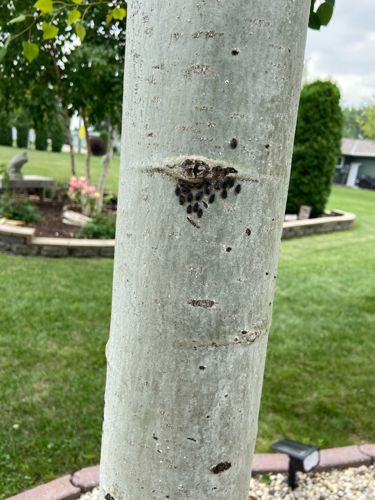
Sap-feeding Beetles (Likely)
Likely species within the family Nitidulidae, such as Glischrochilus quadrisignatus (Fourspotted Sap Beetle) or related genera.
- Order & Family
- Order Coleoptera (Beetles), Family Nitidulidae (Sap Beetles) is a strong possibility given the appearance and clustering behavior.
- Size
- Typically 'small' to 'very small', ranging from 2 mm to 12 mm in length, depending on the specific species. The individuals in the image appear to be on the smaller end of this range.
Natural Habitat
Forests, orchards, gardens, and any area with trees, especially those with wounds or sap flows. They can be found on a variety of deciduous and coniferous trees.
Diet & Feeding
Sap from trees, particularly fermenting sap or sap exuding from wounds. Some species may also feed on decaying fruit or other plant matter.
Behavior Patterns
The cluster of small, dark insects around a tree wound strongly suggests they are likely opportunistic feeders drawn to sap. Several species of insects, including sap beetles and fruit flies, are attracted to fermenting sap exuding from tree injuries. Their aggregation likely serves to maximize feeding on this resource. Some species may also lay eggs in such environments. They are generally more active during warmer months.
Risks & Benefits
Risks: While generally not a direct threat to healthy trees, some sap beetles can be vectors for certain tree diseases, especially if the tree is already stressed or has significant wounds. In some agricultural contexts, they can damage ripening fruits. Benefits: They can play a minor role in decomposition by consuming decaying plant matter and sap. They are also a food source for other insects and birds.