
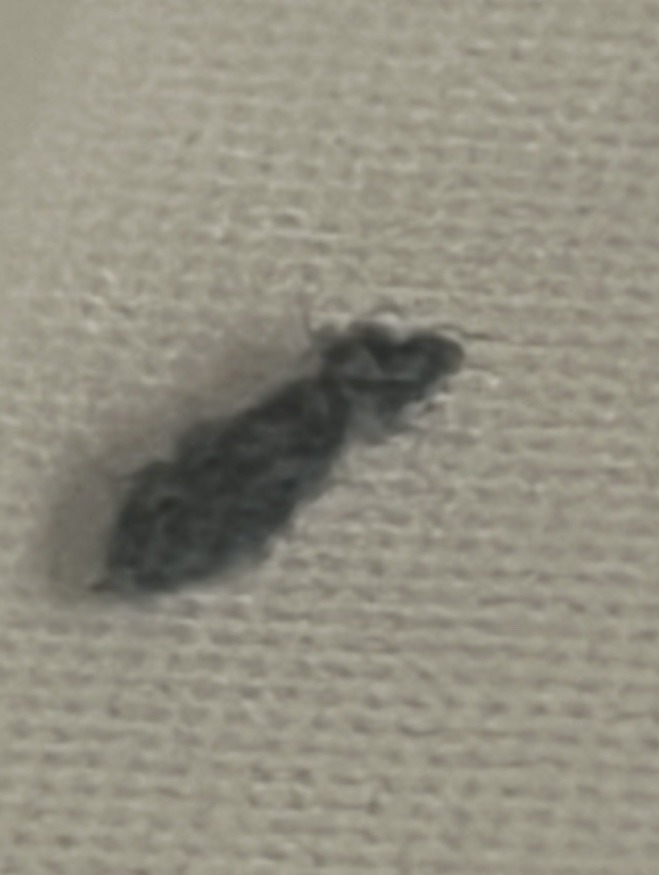
Masked Hunter (Nymph)
Reduvius personatus
- Order & Family
- Hemiptera / Reduviidae
- Size
- Nymphs grow to about 15-20 mm in length.
Natural Habitat
Typically found indoors in dry areas, attics, or storage closets where dust and lint accumulate; also found in outdoor areas like bird nests or mammal dens.
Diet & Feeding
Carnivorous and predatory; they feed on other small arthropods including bed bugs, carpet beetles, termites, and earwigs.
Behavior Patterns
Nymphs are known for camouflaging themselves by coating their sticky bodies with dust, sand, or lint (this is why it looks like a 'dust bunny'). They are nocturnal and move with slow, hitching motions to avoid detection by prey.
Risks & Benefits
Benefits: They provide natural pest control by eating common household pests like bed bugs. Risks: While not aggressive and not disease carriers, they can deliver a painful bite to humans if handled or provoked, similar to a bee sting.