
Community identification
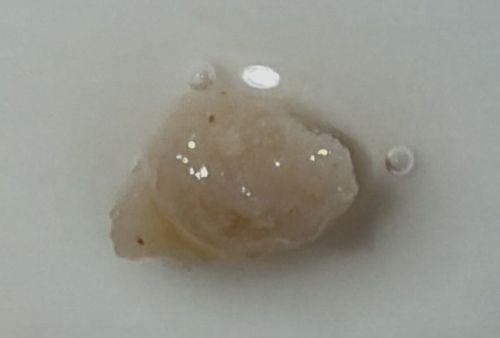
Non-Insect Object (Likely tonsil stone or food debris)
Tonsillolith (if tonsil stone)
- Order & Family
- N/A (This is not a biological organism like an insect)
- Size
- Variable; usually 1mm to 1cm in diameter.
Natural Habitat
Typically found in the crevices of palatine tonsils in the human throat. Alternatively, could be a crumbled piece of food found on a kitchen counter or floor.
Diet & Feeding
N/A (Accretion of cellular debris, bacteria, and mucus).
Behavior Patterns
Stationary calcification. Tonsil stones form when debris (dead cells, mucus, saliva, and food) gets trapped in the deep pockets (crypts) of the tonsils and hardens over time.
Risks & Benefits
Risks: Can cause chronic bad breath (halitosis), sore throat, potential infection, or difficulty swallowing. Benefits: None, it is a metabolic byproduct/debris.