
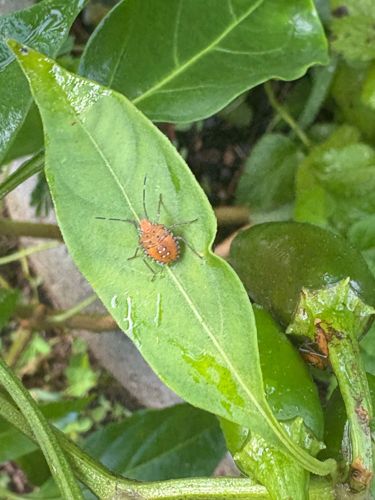
Stink Bug Nymph (likely early instar)
Various species within the Pentatomidae family (e.g., Halyomorpha halys for Brown Marmorated Stink Bug, Euschistus servus for Brown Stink Bug, Nezara viridula for Green Stink Bug, depending on the specific species and life stage, which is difficult to pinpoint from this image alone.)
- Order & Family
- Order: Hemiptera, Family: Pentatomidae
- Size
- Nymphs: Typically 1-12 mm, depending on the instar and species. Adults range from approximately 10-18 mm (0.4-0.7 inches) depending on the species.
Natural Habitat
Stink bugs are found in a wide variety of habitats where their host plants are present, including agricultural fields, gardens, orchards, woodlands, and urban landscapes. They are often found on the leaves, stems, and fruits of plants.
Diet & Feeding
Stink bugs are primarily phytophagous (plant-feeding). They feed by piercing plant tissues with their needle-like mouthparts (rostrum) and sucking out plant juices. Their diet includes a wide variety of plants, including fruits, vegetables, field crops, and ornamental plants.
Behavior Patterns
Stink bugs undergo incomplete metamorphosis, meaning they hatch from eggs into nymphs (like the one pictured) and gradually develop into adults through a series of molts. Nymphs are often brightly colored and may stay congregated after hatching. Adults are known for releasing a foul-smelling liquid from glands on their thorax when disturbed, which deters predators. They are generally slow-moving. Many species overwinter as adults in sheltered locations and become active in spring.
Risks & Benefits
Risks: Stink bugs are considered significant agricultural pests. Their feeding can cause cosmetic damage to fruits and vegetables, leading to dimpling, cat-facing, or general discoloration and deformation, making crops unmarketable. They can also transmit plant diseases. Large infestations can lead to significant economic losses for farmers. While they do not typically bite humans, their foul-smelling defensive secretion can be an irritant if it gets on skin or in eyes. Benefits: In certain ecosystems, some species of stink bugs are predatory and feed on other insect pests, offering some biological control. However, the majority of pest species outweigh these benefits in agricultural settings.